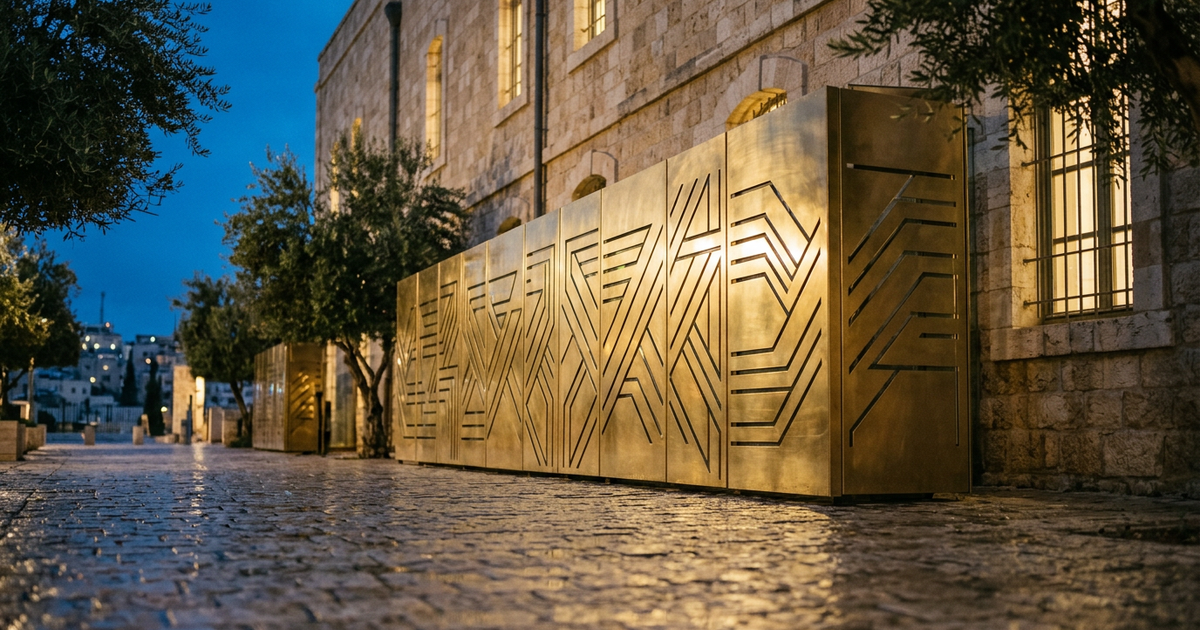
Why Sdot Yam: How a Kibbutz Next to a Roman Port Built Caesarstone, the NASDAQ-Listed Quartz Surfaces Pioneer
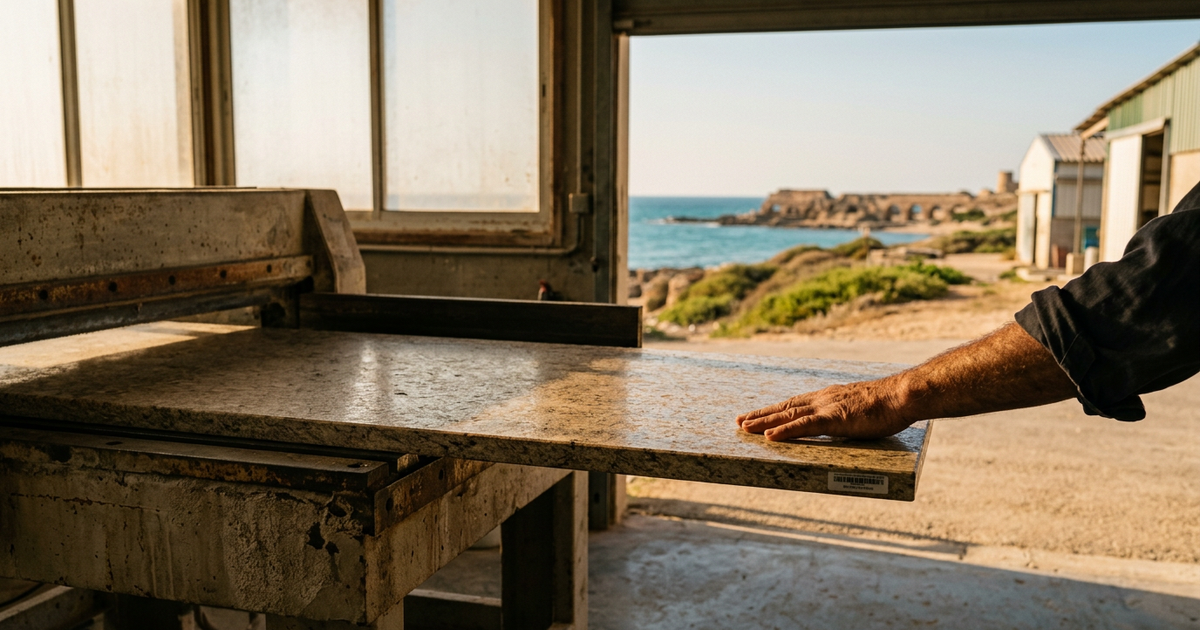
Caesarstone defined the global engineered-quartz countertop category. Founded 1987 on Kibbutz Sdot Yam adjacent to ancient Caesarea, listed on NASDAQ in 2012. Kibbutz Sdot Yam retains ~32%. The case study in category creation.
Caesarstone Ltd. is the engineered-quartz surfaces company that defined a global product category. The company manufactures premium quartz countertops, vanities, flooring, and wall cladding from a composition that blends up to 93 percent ground natural quartz with resins and pigments, vibro-compressed under vacuum into non-porous slabs that compete directly with natural granite and marble. Caesarstone listed on NASDAQ in March 2012 under the ticker CSTE at $11 per share. 2023 revenue was $565.2 million; the company recorded a net loss of $107.7 million on the same year and entered a multi-year restructuring program. The company was founded in 1987 on Kibbutz Sdot Yam on Israel's Mediterranean coast, adjacent to the ancient Roman port of Caesarea from which the company takes its name. Kibbutz Sdot Yam holds approximately 32 percent of the company today.
The Sdot Yam founding and the Caesarea adjacency
Kibbutz Sdot Yam was founded in 1937 near Haifa as a fishing and agricultural settlement and relocated in 1940 to its current location on the Mediterranean coast at the site of ancient Caesarea Maritima — the Roman port city built by Herod the Great. The kibbutz inherited the archaeological site, the coastal land, and the geographic position roughly halfway between Tel Aviv and Haifa. The economy of the early decades was built on Mediterranean fishing, agriculture, and tourism related to the Caesarea ruins. By the 1980s, the kibbutz had begun to industrialize, opening a small terrazzo-tile factory that produced floor tiles for the Israeli construction market.
The terrazzo operation was failing by the mid-1980s. Terrazzo had been displaced in the Israeli market by cheaper imported tile and by changing aesthetic preferences. The kibbutz faced a familiar decision: shut down the industrial operation, or repurpose the existing factory infrastructure for a different product. The members chose to repurpose.
1987: the Bretonstone license and the Technion partnership
The answer was engineered quartz. The technology had been invented in 1963 by the Italian firm Breton — a process called Bretonstone that bound ground quartz with polymer resin under vibration and vacuum. Bretonstone had been licensed to a handful of manufacturers globally, but the product had not achieved meaningful market scale by the mid-1980s.
The Sdot Yam decision was to license Bretonstone, refurbish the failing terrazzo factory with the new technology, and produce engineered quartz for the Israeli construction market. The technical partnership that made the launch possible was with Professor Moshe Narkis of the Technion Israel Institute of Technology in Haifa, whose materials-science research group helped Sdot Yam optimize the resin-quartz binding chemistry, develop pigment systems for color and pattern consistency, and address the curing-and-polishing process. The first Caesarstone product launched in 1987. The brand name was a deliberate reference to the kibbutz's location adjacent to the Caesarea ruins.
Caesarstone was the company that turned engineered quartz from a Bretonstone technology license into a global premium-surface category. The product did not exist as a meaningful consumer category before 1987 in Israel and before the early 2000s globally. Sdot Yam built the category.
From domestic Israel to global category-defining
The company spent the first decade after 1987 building the Israeli market. By the late 1990s, Caesarstone was the dominant engineered-quartz countertop in Israeli kitchen renovations. The transition to export markets began in the early 2000s with entry into Australia and continued through North American expansion. By the early 2010s, Caesarstone had become a globally recognized premium-surfacing brand.
In 2005, Caesarstone opened a second Israeli production facility at the Bar-Lev Industrial Park. In 2006, the Israeli private equity firm Tene Investment Fund invested $25 million in exchange for 21.7 percent of the company. Subsidiaries were established in Australia (2008), Canada (2010), the United States and Singapore (2011), the United Kingdom (2017), and Scandinavia (2023). By 2015, Caesarstone had opened a US production facility at Richmond Hill, Georgia, with an investment of approximately $100 million.
The 2012 NASDAQ listing
Caesarstone listed on NASDAQ in March 2012 at $11 per share, becoming the second kibbutz company to access the US public markets after Shamir Optical's 2005 listing (which had already been privatized through the Essilor partial acquisition by the time Caesarstone listed). Caesarstone's share price appreciated 44 percent during 2012 — the second-best return among foreign IPOs in the US that year.
Kibbutz Sdot Yam retained a 32 percent position in the listed company — meaningful enough to give the kibbutz strategic control over Caesarstone's direction but small enough that the company operated as a fully public entity with an independent board, professional management, and quarterly disclosure to US investors.
The 2015 governance battle and the recent restructuring
In late 2015, the kibbutz publicly disputed the independence of management-nominated board candidates, advanced its own slate of independent nominees, and ran a proxy contest at the annual general meeting. The kibbutz's candidates were not elected. The episode is preserved in the Caesarstone disclosure record as one of the more public examples of the structural tension between a kibbutz holding company that retains a significant minority position and a professional management team running a NASDAQ-listed industrial.
The more recent challenge is operational. Caesarstone's 2023 revenue of $565.2 million was accompanied by a $107.7 million net loss, driven by softening demand in the global home-improvement market and by mounting regulatory pressure on the use of crystalline silica in engineered quartz manufacturing. Silicosis cases among countertop fabricators have produced a wave of regulatory restrictions. Caesarstone has responded by launching its ICON product line in 2025 — a crystalline-silica-free composition made from a proprietary blend including approximately 80 percent recycled materials. The Richmond Hill, Georgia production facility was shut down in 2024.
| Founded | 1987, Kibbutz Sdot Yam (kibbutz founded 1937) |
|---|---|
| Headquarters | Kibbutz Sdot Yam, near Caesarea |
| Ownership | Kibbutz Sdot Yam ~32%; NASDAQ-listed |
| Ticker | NASDAQ: CSTE |
| NASDAQ listing | March 2012, $11 per share IPO |
| 2023 revenue | $565.2 million |
| 2023 net loss | $107.7 million |
| Export markets | 50+ countries |
The structural lesson
Caesarstone is the case study in category creation. The kibbutz industrial complex contains several examples of companies that scaled an existing global category — Maytronics in pool robotics, Plasson in pipe fittings, Palram in thermoplastic sheet. Caesarstone did something different. It took a 1963 Italian patent for engineered quartz, a struggling kibbutz terrazzo factory, and a Technion materials-science partnership, and built a global premium-surface category that did not previously exist at scale.
Netafim faced a similar dynamic with drip irrigation. Both companies eventually accepted significant outside capital to fund the global build-out: Netafim via Mexichem in 2017, Caesarstone via the 2012 NASDAQ listing and the Tene investment in 2006. The 32 percent that Sdot Yam retained at the NASDAQ listing is the structural mirror of the 20 percent that Hatzerim retained after the Mexichem sale. Both kibbutzim chose to keep a meaningful position in companies they could no longer fund on their own.
Part of the Olam series on the kibbutz industrial complex. Read the pillar.