Hadassah: The Women's Zionist Organization and Its Medical Mandate
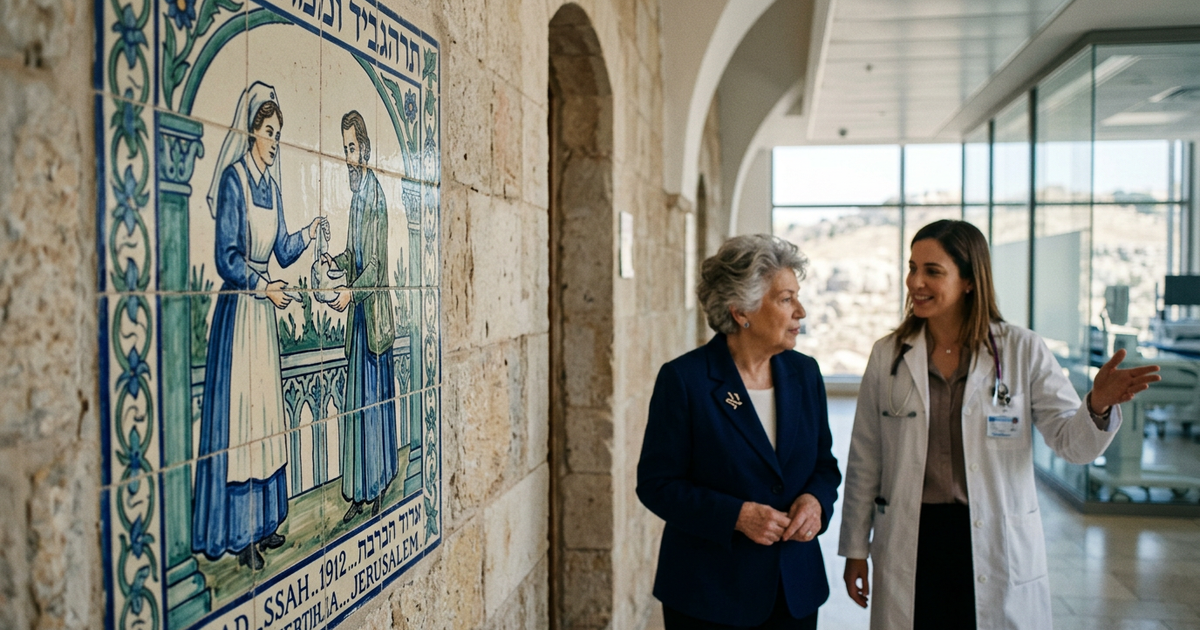
Hadassah, founded by Henrietta Szold in 1912, pairs one of the largest American Jewish women's organizations with operational responsibility for major Israeli medical infrastructure. The institutional template, the Hadassah Medical Organization, and the 2020s repositioning.
Hadassah, The Women's Zionist Organization of America, is one of the largest and oldest Jewish women's organizations in the world. Founded in 1912 by Henrietta Szold, the organization has operated continuously for over a century as an American Zionist institution with a primary mandate in Israeli medical infrastructure — specifically the Hadassah Medical Organization in Jerusalem.
The institutional structure pairs a large American membership organization with operational responsibility for major Israeli medical infrastructure. The combination is unusual in the broader American Jewish institutional landscape and is the operative model for understanding Hadassah's continuing role in 2026.
The founding and early mandate
Henrietta Szold founded Hadassah in 1912 at a gathering of the Daughters of Zion Study Circle in New York. The original mandate combined Zionist advocacy with practical philanthropic work in Mandate-era Palestine — particularly public health infrastructure, nursing, and maternal-child health services.
The American Zionist landscape in 1912 was institutionally limited. Hadassah's founding represented a specific commitment to women-led Zionist organization, practical philanthropic execution alongside political advocacy, and on-the-ground medical infrastructure development in the Yishuv. The organization's early decades — through the Mandate period, the early state period, and the 1948 War of Independence — established the institutional template that continues to operate.
Hadassah Medical Organization in Jerusalem
Hadassah's primary operational footprint in Israel is the Hadassah Medical Organization, comprising:
Hadassah Ein Kerem. The major teaching hospital in southwestern Jerusalem. One of the largest medical centers in Israel. Houses the Chagall Windows in the synagogue at the hospital, contemporary advanced medical research, and a substantial clinical operation across most major specialties.
Hadassah Mount Scopus. The historical hospital location on Mount Scopus, with continuous operation since the pre-1948 period (with a 1948-1967 interruption when the location was inaccessible following the Jordanian annexation of East Jerusalem). Re-established as a working hospital after 1967.
The combined Hadassah Medical Organization operates as one of Israel's major academic-medical-center networks, alongside Sourasky/Ichilov, Sheba, Rambam, and the broader national hospital architecture.
The American membership and fundraising structure
The American Hadassah membership organization has historically operated at substantial scale — hundreds of thousands of dues-paying American members across chapters in major US Jewish population centers. The institutional architecture combines:
- National-level governance and program direction.
- Regional chapters with autonomous fundraising and advocacy programming.
- Specific dedicated program areas including healthcare advocacy, women's health, Israel travel, and educational programming.
- The direct philanthropic relationship to Hadassah Medical Organization in Israel.
Membership numbers have declined from peak mid-20th-century levels, consistent with the broader trajectory of legacy American Jewish women's organizations. The institutional infrastructure remains substantial.
The 2020s repositioning
Hadassah, like other legacy American Zionist organizations, has navigated significant institutional repositioning across the 2010s and 2020s. Membership demographics, generational engagement, and the broader American Jewish institutional landscape have shifted materially. Hadassah's strategic response has included:
Programmatic emphasis on women's health advocacy in the US. Mammography screening, women's heart health, and broader women's health programming inside the American organizational footprint.
Continued Hadassah Medical Organization investment. Major capital investment in Hadassah Ein Kerem and Mount Scopus across the 2015-2025 cycle, including the Sarah Wetsman Davidson Hospital Tower and the broader campus expansion.
Israel advocacy in the post-October 7 environment. The post-October 7 American Jewish institutional landscape has elevated visible Israel advocacy in ways that organizations including Hadassah have leaned into.
Why the institution matters
For understanding the American Zionist institutional landscape in 2026, Hadassah is a structural reference point on several dimensions. It is one of the few American Zionist organizations with direct operational responsibility for major Israeli infrastructure rather than purely advocacy or fundraising mandates. It is one of the oldest continuous American Zionist organizations. It represents a women-led institutional model that predates by decades the broader American Jewish institutional women's-leadership conversation.
The Henrietta Szold institutional template — practical philanthropy, on-the-ground execution, women's institutional leadership, US-Israel medical infrastructure linkage — continues to define Hadassah's positioning a century after the founding. The organization's relevance in 2026 is not nostalgia. The Hadassah Medical Organization in Jerusalem remains one of the major operating Israeli medical institutions, financed substantially through the American Hadassah membership and donor architecture. The continuity is operational, not symbolic.