Nathan Kirsh: The Eswatini Billionaire Behind Jetro Restaurant Depot and the $29.1B Sysco Deal
South African-born Eswatini billionaire who built Jetro Restaurant Depot into the dominant US cash-and-carry wholesaler. Sysco contracted to acquire for $29.1B in March 2026. Forbes April 2026: $17.6B, Africa's 2nd richest. Kirsh Foundation: 14,000 Eswatini startups.
The Builders | Olam.business
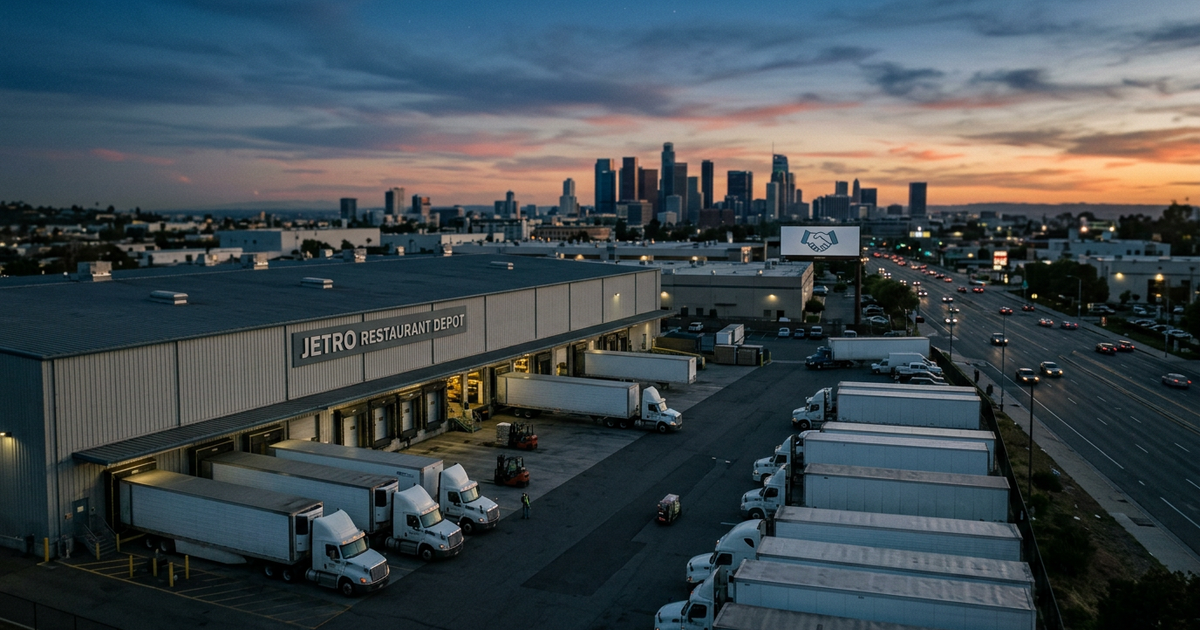
Nathan "Natie" Kirsh (born January 6, 1932, Potchefstroom, South Africa) is the South African-born Eswatini-based billionaire who founded Jetro Cash & Carry in Brooklyn in 1976 and acquired Restaurant Depot in 1994, building the combined Jetro Holdings into the dominant U.S. cash-and-carry wholesaler to bodegas and independent restaurants. In March 2026, Sysco contracted to acquire Jetro Restaurant Depot for $29.1 billion including debt — one of the largest food-distribution transactions ever recorded.
Forbes valued Kirsh at $17.6 billion as of April 2026 — Africa's second richest individual after Johann Rupert, and the wealthiest person in Eswatini. He lives in Ezulwini, holds Eswatini citizenship, and maintains residency in the United Kingdom and the United States. Through the Kirsh Foundation he has funded over 14,000 Eswatini small-business startups and over 700 Israeli entrepreneurs.
Snapshot
| Born | January 6, 1932, Potchefstroom, South Africa |
| Parents | Lithuanian Jewish immigrants to South Africa |
| Youth movement | Habonim Dror (Labour Zionist) |
| Education | Potchefstroom Boys High (matric 1949); B.Com, University of the Witwatersrand (1952); honorary doctorate, University of Eswatini |
| First venture | 1958 — corn milling and malt business in Swaziland with £1,200 inherited from his father |
| Acquired | 1970 — Moshal Gevisser (South African wholesale food distributor) |
| Founded | June 1976 — Jetro Cash & Carry, Brooklyn, New York |
| Acquired | 1994 — Restaurant Depot; merged with Jetro under Jetro Holdings |
| Pending exit | March 2026 — Sysco contracted to acquire Jetro Restaurant Depot for $29.1 billion |
| Net worth | $17.6 billion (Forbes, April 2026) — Africa's 2nd richest |
| Wife | Frances Herr |
| Children | Philip Kirsh; Wendy Fisher (artist, philanthropist, A4 Arts Foundation); Linda |
| Residence | Ezulwini, Eswatini (Eswatini citizenship); residency in UK and US |
The Business Story
Nathan Kirsh was born in Potchefstroom, a small South African urban center 90 minutes outside Johannesburg, to parents who had immigrated from Lithuania. His father worked as an ostrich-feather salesman before finding success in brewing and operating a malt factory. Kirsh attended Potchefstroom Boys High, matriculated in 1949, and earned a B.Com from the University of the Witwatersrand in 1952. He joined Habonim Dror, the Labour Zionist youth movement, as a teenager — an affiliation that shaped his identity and philanthropy across his career.
In 1958, with £1,200 inherited from his father, Kirsh launched his first venture: a corn milling and malt business in what was then Swaziland. He won exclusive control over the corn market from the British colonial authorities. The family moved permanently from Potchefstroom to Swaziland in 1960. Kirsh has described Eswatini, where he has lived since, as his "fourth child."
In 1970, Kirsh acquired Moshal Gevisser, a South African wholesale food distributor. The acquisition gave him scale across the southern African food-and-grocery wholesale layer. In 1986, after the Sanlam-led acquisition of much of Kirsh Industries, he left South Africa.
The defining chapter of the Kirsh business career began in June 1976 with the founding of Jetro Cash & Carry in Brooklyn. Jetro was a wholesale operator selling to bodegas, small grocery stores, and the city's smallest independent operators. In 1994, Kirsh acquired Restaurant Depot, a cash-and-carry wholesaler focused on independent restaurants. The two businesses merged under Jetro Holdings and became sister operations.
By 2018, Jetro Holdings operated approximately 115 Jetro Cash & Carry and Restaurant Depot stores across the United States. Kirsh owned 70–75%. Warren Buffett reportedly tried to acquire a minority stake in 2003; Kirsh and Buffett could not agree on terms.
In late March 2026, Sysco contracted to acquire Jetro Restaurant Depot for $29.1 billion including debt, with shareholders to receive $21.6 billion in cash plus 91.5 million Sysco shares (approximately 16% of Sysco's stock). The transaction valued the company at more than 14 times its operating income — extraordinary for the food-distribution category and one of the largest food-sector transactions on record. The April 2026 Forbes net-worth figure of $17.6 billion reflected the Sysco transaction.
A separate Israeli chapter ran in parallel for decades. In the late 1970s, Kirsh acquired Magal Security Systems from Israel Aerospace Industries — Magal manufactures perimeter security and electronic fencing. Magal listed on Nasdaq in 1993. In 2014, Kirsh sold his 40% stake to FIMI, the leading Israeli private-equity firm.
Why Kirsh Matters in Israel
Kirsh is one of the most consequential international Jewish philanthropic operators of his generation, with Israel as one of two principal commitment geographies (the other being Eswatini).
Through the Kirsh Foundation, he has provided interest-free loans to more than 700 Jewish and Arab entrepreneurs in Israel since 2008 via the Natan Fund — a small-business financing vehicle with a reported 85% success rate. He has funded a computer-training program for yeshiva students. The Kirsh family donated $10 million to the Jerusalem Arts Campus — the new downtown campus for the Nisan Nativ Acting Studio, the Sam Spiegel Film and Television School, the School of Visual Theater, and the Center for Middle Eastern Music. The foundation has also funded the Britain Israel Research and Academic Exchange Partnership in joint initiative with the British Council, the British Embassy in Israel, and the Pears Foundation.
He has supported the Jewish People Policy Institute. In 2020 he donated $8.8 million to the University of the Witwatersrand. In 2021, the foundation funded an IsraAID mission to support the COVID-19 vaccine rollout in Eswatini.
The most visible Kirsh-funded U.S. initiative is Shine A Light, launched by the family in 2021 following the May 2021 escalation in Israel-Gaza violence. Shine A Light has aired across major U.S. television properties including Today and Saturday Night Live, defines certain forms of Israel criticism as antisemitism, and is endorsed by the Anti-Defamation League, the American Jewish Committee, and major U.S. Jewish denominations. The campaign has drawn praise from across the mainstream U.S. Jewish institutional layer and criticism from progressive Jewish and Palestinian-rights groups.
In Eswatini, the philanthropic footprint is transformative. Between 2001 and 2016, the Kirsh Foundation funded 14,000 small-business startups with a 70% success rate. By 2015, approximately 20,000 people were employed by businesses started with foundation capital. The microfinance program runs in collaboration with Swazi chiefs, providing loans and financial-literacy training specifically to Swazi women. The foundation has donated computers to nearly 150 Eswatini high schools.
What the Kirsh Group Does Today
The Kirsh Group (also Kirsh Holdings Group) is the master holding entity. Until the Sysco deal closes, its principal asset is the controlling interest in Jetro Holdings (Jetro Cash & Carry plus Restaurant Depot). Following completion, the group will hold the Sysco share package plus the cash component. Other holdings:
- Real estate across the UK, the US, Australia, and Eswatini
- Swazi Plaza Properties (50%) in Eswatini
- Diversified portfolio holdings across listed equities
- The Kirsh Foundation as the philanthropic arm
Kirsh's Key Holdings
- Jetro Holdings (Jetro Cash & Carry + Restaurant Depot) — controlling stake; pending sale to Sysco for $29.1B
- Swazi Plaza Properties — 50% interest
- Real estate across UK, US, Australia, Eswatini
- The Kirsh Foundation — Eswatini, Israel, US, UK programs
- Past holdings exited: Magal Security Systems (40% stake sold to FIMI, 2014); Kirsh Industries (sold to Sanlam, 1986)
Kirsh's Legacy and Influence
Three legacies, distinct.
The first is the Jetro Restaurant Depot platform — the dominant U.S. cash-and-carry wholesaler to bodegas and independent restaurants, built over five decades from a single Brooklyn store. The Sysco transaction at $29.1 billion is the largest exit of Kirsh's career and one of the most significant food-distribution deals on record.
The second is Eswatini. The Kirsh Foundation's small-business financing program has materially shaped the small-enterprise layer of the Eswatini economy. 14,000 startups, a 70% success rate, computers in 150 high schools, and microfinance loans to Swazi women constitute one of the more institutionally consequential international philanthropic footprints inside an African economy by a single principal-funded foundation.
The third is the U.S. Jewish and Israeli institutional commitment. The Jerusalem Arts Campus, the Natan Fund for Israeli and Arab entrepreneurs, the support for the JPPI, the Shine A Light campaign, and the broader aggregate giving to Jewish and Israeli causes position Kirsh as one of the most consequential diaspora-philanthropic operators in the global Jewish business economy.
Why Kirsh Matters Now
The Sysco transaction at $29.1 billion — announced March 2026 — instantly repositioned Kirsh from a quiet billionaire operating largely outside the mainstream U.S. press into one of the largest individual liquidity events of the year. The transaction's structure (cash plus a substantial Sysco equity stake) gives Kirsh ongoing exposure to the consolidated North American food-distribution platform.
At 94, with the operating chapter substantially complete, the next decade of Kirsh capital allocation will be philanthropic. The Israeli, Eswatini, and U.S. Jewish institutional programs are positioned to expand materially as the transaction closes and liquidity becomes available. For Israeli small-business financing, Eswatini economic development, and the U.S. Jewish institutional layer, the Kirsh Foundation footprint is about to step into a larger role.
FAQ
Who is Nathan Kirsh?
Nathan "Natie" Kirsh (born January 6, 1932, in Potchefstroom, South Africa) is the South African-born Eswatini-based billionaire who founded Jetro Cash & Carry in Brooklyn in 1976 and acquired Restaurant Depot in 1994. He owns the majority of Jetro Holdings, which is being acquired by Sysco in a $29.1 billion transaction announced March 2026.
What is Jetro Restaurant Depot?
Jetro Restaurant Depot is the merged entity of Jetro Cash & Carry (founded in Brooklyn in 1976) and Restaurant Depot (acquired in 1994). The combined company is the dominant U.S. cash-and-carry wholesaler to bodegas, independent grocery operators, and independent restaurants, with approximately 115 stores nationwide. In March 2026, Sysco contracted to acquire the company for $29.1 billion including debt.
Why is Nathan Kirsh based in Eswatini?
Kirsh moved his family from Potchefstroom, South Africa, to Eswatini (then Swaziland) in 1960 after launching his first venture — a corn milling and malt business — in 1958. He has lived there ever since, holds Eswatini citizenship, and has described Eswatini as his "fourth child." He maintains residency in the UK and the US.
What is the Kirsh Foundation?
The Kirsh Foundation is Nathan Kirsh's international philanthropic platform. In Eswatini, it has financed 14,000+ small-business startups (2001–2016, 70% success rate) and donated computers to nearly 150 high schools. In Israel, through the Natan Fund, it has provided interest-free loans to 700+ Jewish and Arab entrepreneurs (85% success rate) and funded the Jerusalem Arts Campus with $10 million. In the U.S., it funds the Shine A Light campaign against antisemitism.
Is Nathan Kirsh related to Magal Security Systems?
Yes. Kirsh acquired Magal Security Systems from Israel Aerospace Industries in the late 1970s and listed the company on Nasdaq in 1993. Magal manufactures perimeter security and electronic fencing systems. In 2014, Kirsh sold his 40% stake to FIMI Opportunity Fund, the leading Israeli private-equity firm.
How much is Nathan Kirsh worth?
Forbes estimated his net worth at $17.6 billion as of April 2026, making him Africa's second-richest individual (after Johann Rupert) and the wealthiest person in Eswatini. The figure reflects the March 2026 Sysco transaction to acquire Jetro Restaurant Depot for $29.1 billion.
More from The Builders
- John Gandel: Australia's Largest Mall Owner
- Idan Ofer: The £24.5 Billion Israeli Fortune
- Mori Arkin: The Agis Fortune Israelis Don't Talk About
- Noam Lanir: Empire Online to Livermore Investments
מי הוא נתן (נטי) קירש? המיליארדר האסוואטיני שמאחורי Jetro Restaurant Depot — ועסקת Sysco של 29.1 מיליארד דולר
נתן "נטי" קירש (נולד ב-6 בינואר 1932 בפוצ'פסטרום, דרום אפריקה) הוא המיליארדר יליד דרום אפריקה הפועל מאסוואטיני, מייסד Jetro Cash & Carry בברוקלין ב-1976 ורוכש Restaurant Depot ב-1994, שבנה את Jetro Holdings לסיטונאי ה-cash-and-carry הדומיננטי בארה"ב ללקוחות בודגות ומסעדות עצמאיות. במרץ 2026 חתמה Sysco על הסכם לרכישת Jetro Restaurant Depot תמורת 29.1 מיליארד דולר כולל חוב.
פורבס העריך את שוויו ב-17.6 מיליארד דולר נכון לאפריל 2026 — האדם השני העשיר ביותר באפריקה. דרך קרן קירש מימן מעל 14,000 עסקים קטנים באסוואטיני, מעל 700 יזמים בישראל דרך קרן נתן, את קמפוס האמנויות בירושלים, ואת מסע Shine A Light בארה"ב.
The Olam Editorial Team | The Builders / הבונים