NVIDIA Israel: The Largest Non-US NVIDIA Operation and the Mellanox Legacy

NVIDIA's largest engineering operation outside the United States. ~5,000 employees across seven Israeli R&D centers. Runs through the 2019 Mellanox acquisition for $6.9B — the deal that gave NVIDIA the InfiniBand interconnect inside every AI training cluster. Planned Kiryat Tivon campus (160,000 sqm, 10,000 employees) would make NVIDIA Israel's largest private employer.
NVIDIA Israel is the company's largest engineering operation outside the United States and the structural anchor of NVIDIA's global AI-infrastructure supply chain. Approximately 5,000 employees as of 2026, running through the 2019 acquisition of Mellanox Technologies for $6.9 billion — one of the largest technology acquisitions in Israeli history and the transaction that gave NVIDIA the InfiniBand high-performance interconnect that now sits inside every AI training cluster shipped to hyperscalers. NVIDIA has publicly committed to Israel as its "second home" and announced a 160,000-square-meter campus in Kiryat Tivon (construction beginning 2027, initial occupancy 2031) that would take Israeli headcount toward 15,000 over the following decade — potentially making NVIDIA Israel's largest private employer.
Footprint Snapshot
- Legal entity: NVIDIA Networking Ltd. (former Mellanox), NVIDIA Israel Ltd., and adjacent subsidiaries
- Current headcount: approximately 5,000 across Israel
- R&D centers: Yokneam, Tel Aviv, Herzliya, Ra'anana, Beer Sheva, Netanya, Kiryat Tivon (planned)
- Foundational acquisition: Mellanox Technologies, closed April 2020 for $6.9 billion
- Israeli site leader: Amit Krig, Senior Vice President of Software Engineering
- Israel-1 supercomputer: among the world's 50 most powerful systems, deployed at Mevo Carmel
- Planned Kiryat Tivon campus: 160,000 sqm, 10,000 employees at that site alone, construction 2027, occupancy 2031
- NVIDIA global market cap: approximately $4.5 trillion (mid-2026)
- Signature technology anchor: InfiniBand — the interconnect fabric inside every NVIDIA AI training cluster shipped to hyperscalers
The 2019 Mellanox Acquisition — The Foundational Deal
NVIDIA acquired Mellanox Technologies in a transaction announced in March 2019 and closed in April 2020 at approximately $6.9 billion. It was one of the largest technology acquisitions of an Israeli company in history and the strategic move that positioned NVIDIA for the AI infrastructure buildout that defined the following five years.
Mellanox had been founded in 1999 by Eyal Waldman, Roni Ashuri, and Michael Kagan in Yokneam. The company built the InfiniBand and Ethernet high-performance interconnect technology that connects servers, storage, and GPUs inside data centers — the plumbing that makes it possible for compute nodes to share workloads at low latency and high bandwidth. Mellanox IPO'd on NASDAQ in 2007, grew steadily through the 2010s as high-performance computing and hyperscaler infrastructure scaled, and reached approximately $1 billion in annual revenue by 2018.
NVIDIA's strategic thesis for the acquisition was that AI training workloads would become the dominant data-center compute pattern within a decade, and that AI training clusters would require networking bandwidth and latency that only InfiniBand could deliver. That thesis proved correct. Every Hopper-generation (H100, H200) and Blackwell-generation (B100, B200, GB200) NVIDIA AI cluster shipped to a hyperscaler runs InfiniBand between the GPUs. The Mellanox acquisition became the reference case for a strategically prescient technology M&A move.
Eyal Waldman continued as Mellanox General Manager inside NVIDIA through 2021 and left in the aftermath of a personal family tragedy — his daughter Danielle was killed in the October 7 attacks in 2023. His post-Mellanox investment activity through the Waldman family office is covered in Olam's founder-led family offices coverage.
The Israeli Engineering Footprint
NVIDIA's Israeli operations run across seven R&D centers with approximately 5,000 employees as of 2026:
- Yokneam — the founding Mellanox site, still the largest NVIDIA Israeli location and the anchor of the InfiniBand and Ethernet networking divisions
- Tel Aviv — software engineering and CUDA optimization work for AI training clusters
- Herzliya — engineering across multiple product lines
- Ra'anana — additional engineering and product work
- Beer Sheva — the Negev site, part of NVIDIA's expansion into the southern Israeli technology corridor
- Netanya — additional engineering presence
- Kiryat Tivon (planned) — the 160,000-square-meter flagship campus
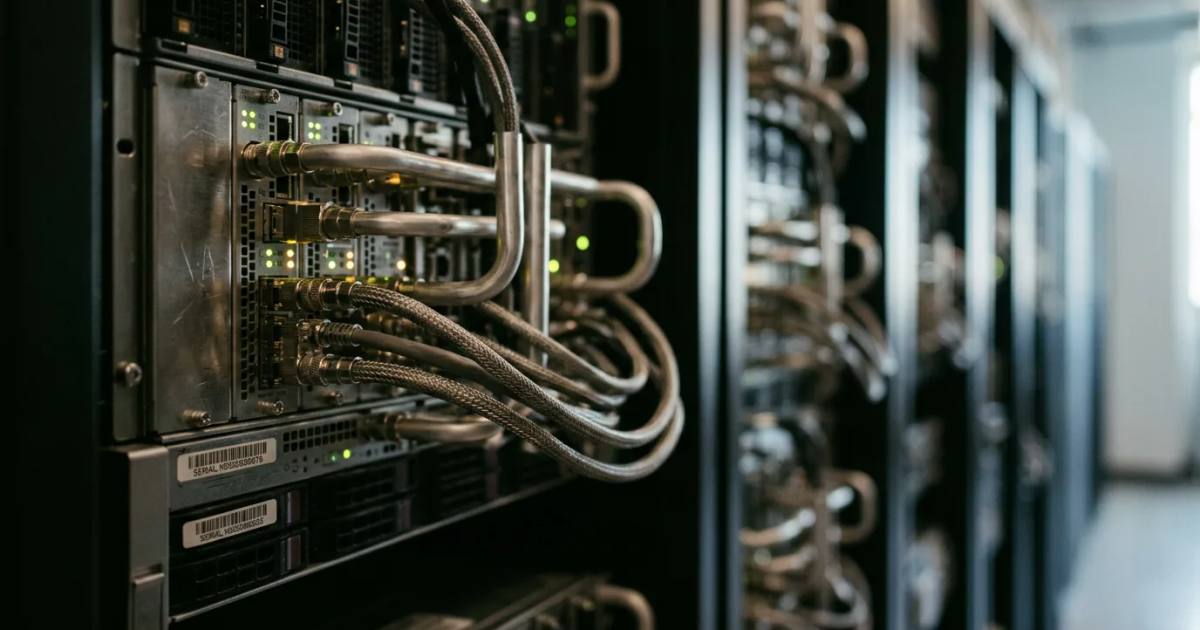
The Israeli teams run NVIDIA's networking division (InfiniBand and Spectrum Ethernet), large portions of the DPU (Data Processing Unit) and SmartNIC development (BlueField family), and significant portions of the AI software stack including CUDA optimization work.
The Kiryat Tivon Campus — Second Home
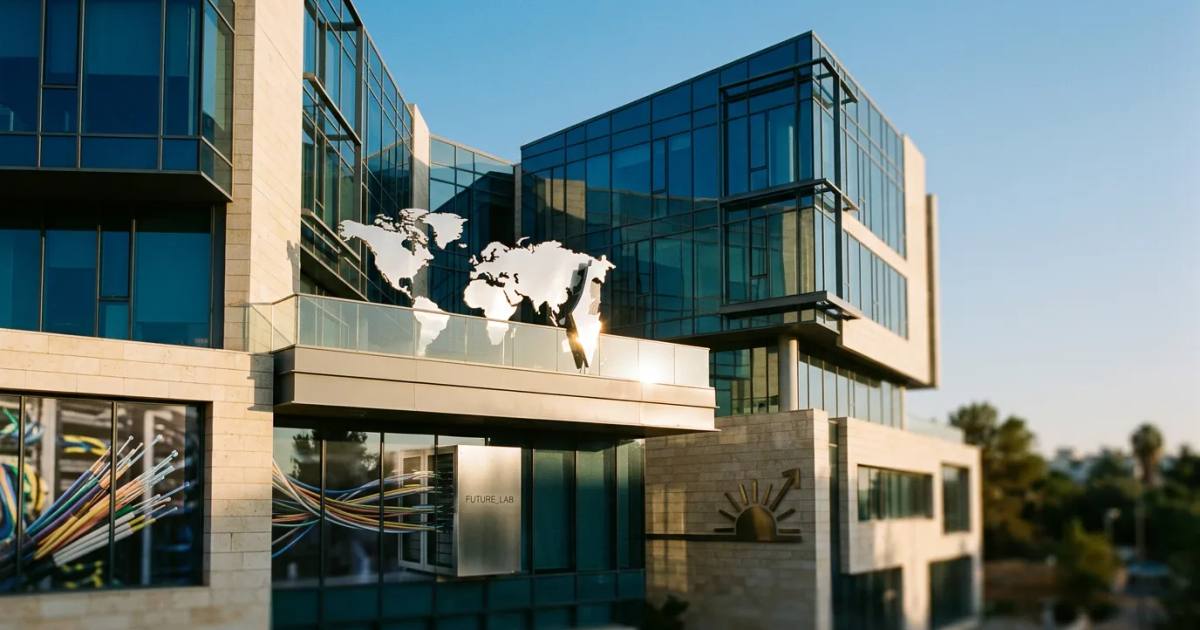
In December 2025, NVIDIA CEO Jensen Huang announced the flagship Kiryat Tivon campus — 160,000 square meters on 90 dunams of state-owned land in the Galilee. Construction is scheduled to begin in 2027, with initial occupancy planned for 2031. The site would house up to 10,000 employees at full occupancy, with total NVIDIA Israeli headcount potentially reaching 15,000 over the following decade.
Huang has publicly described Israel as NVIDIA's "second home," reiterating the framing at GTC 2026 in San Jose, CES 2026 in Las Vegas, and multiple industry appearances through the year. The commercial and political weight of that framing has been substantial — a $4.5 trillion market cap company describing a specific country as its second home is a categorical statement about strategic commitment.
The project is led by Amit Krig, Senior Vice President of Software Engineering and NVIDIA's Israel site leader. If the campus proceeds on schedule, NVIDIA becomes Israel's largest private employer, with implications for the northern Israeli economy, the Israeli technology talent pipeline, and the broader Israeli AI-infrastructure sovereignty question.
Israel-1 and the Mevo Carmel Supercomputer
NVIDIA operates the Israel-1 supercomputer in Israel — a large AI training and inference cluster that ranks among the world's 50 most powerful systems. Israel-1 is not just a marketing showcase; it serves NVIDIA's internal AI research, customer proof-of-concept workloads, and the broader Israeli AI-training-infrastructure ecosystem.
A second server farm — projected to be Israel's largest — is planned for Mevo Carmel at an estimated $1.5 billion in capital investment. The Mevo Carmel facility would be one of the largest single AI-infrastructure investments in Israel and would materially increase Israeli AI-compute capacity available to domestic customers.
Why NVIDIA Israel Matters
NVIDIA Israel is the structural anchor of a broader thesis: Israeli silicon-and-networking expertise has become embedded inside the global AI-infrastructure supply chain at a level that makes the country strategically important to the entire American AI stack.
Four structural implications:
- InfiniBand as the AI-cluster interconnect — the technology developed in Israel (Mellanox) is now the standard networking fabric inside every hyperscaler AI training deployment
- Talent-pipeline gravity — the NVIDIA Israeli engineering scale draws Israeli semiconductor designers, AI-infrastructure entrepreneurs, and adjacent talent into orbit
- Exit dynamics — NVIDIA's Israeli presence increases the probability of Israeli AI-infrastructure company acquisitions (the 2024 Run:AI acquisition is the reference case)
- Cloud sovereignty — with Microsoft's Israeli operation placed under French management in 2024 following internal ethics review, Israel's dependence on US hyperscalers has become a policy question; NVIDIA's in-country compute and Israel-1 supercomputer provide a measure of AI infrastructure independence
The Run:AI Acquisition
NVIDIA's April 2024 acquisition of Run:AI — the Israeli AI-orchestration platform, founded 2018 by Omri Geller and Ronen Dar — was completed in the ~$700 million range. Run:AI's product managed GPU resource allocation across AI training workloads; the acquisition folded that capability into NVIDIA's own AI-infrastructure software stack. Run:AI operates as a distinct NVIDIA product line post-close and has been the reference case for NVIDIA's Israeli AI-infrastructure M&A pattern.
Risks
- Security environment — a prolonged security situation, including continued tensions with Iran and Hezbollah, could affect the Kiryat Tivon construction timeline. Huang has publicly committed to the country throughout the war ("I am 100% committed to Israel"), but build schedules depend on factors beyond corporate intent.
- Supporting infrastructure — for Israel to capture the full value of the NVIDIA investment, planning and land-authority efficiency, electricity grid capacity in the North, housing supply for engineers in Kiryat Tivon, and continued talent pipeline through the Technion and Tel Aviv University all need to align.
- Global NVIDIA trajectory — the Israeli footprint depends on continued NVIDIA global growth; any structural repricing of the AI infrastructure category could compress investment pace.
What to Watch in 2026 and Beyond
- Kiryat Tivon planning approvals and construction timeline
- Mevo Carmel server farm buildout and Israel-1 successor supercomputer
- Continued Israeli AI-infrastructure M&A pattern (the Run:AI precedent)
- Israeli headcount trajectory toward the 15,000 target
- Amit Krig's continued role as Israel site leader
Frequently Asked Questions
Why does NVIDIA have such a large Israeli presence?
Through the 2019–2020 acquisition of Mellanox Technologies for $6.9 billion. Mellanox built the InfiniBand interconnect technology that now sits inside every NVIDIA AI training cluster shipped to hyperscalers. The Israeli engineering bench Mellanox brought became the foundation for NVIDIA's largest engineering site outside the US.
How many people does NVIDIA employ in Israel?
Approximately 5,000 as of 2026, distributed across seven R&D centers. If the planned Kiryat Tivon campus proceeds on schedule, Israeli headcount could reach 15,000 over the following decade, potentially making NVIDIA Israel's largest private employer.
What is Israel-1?
Israel-1 is NVIDIA's Israeli supercomputer — an AI training and inference cluster that ranks among the world's 50 most powerful systems. Deployed at Mevo Carmel, it serves NVIDIA's internal AI research, customer proof-of-concept workloads, and the broader Israeli AI-training-infrastructure ecosystem.
Did NVIDIA buy Run:AI?
Yes. NVIDIA acquired Run:AI, the Israeli AI-orchestration platform founded 2018 by Omri Geller and Ronen Dar, in April 2024 in the ~$700 million range. Run:AI operates as a distinct NVIDIA product line post-close.
What is the Kiryat Tivon campus?
NVIDIA's planned 160,000-square-meter flagship Israeli campus, announced December 2025. Construction begins 2027; initial occupancy 2031. Up to 10,000 employees at that site alone. Jensen Huang describes Israel as NVIDIA's "second home."
Who founded Mellanox?
Eyal Waldman, Roni Ashuri, and Michael Kagan co-founded Mellanox in 1999 in Yokneam. Waldman served as CEO through the 2019 NVIDIA acquisition and stayed as Mellanox General Manager inside NVIDIA through 2021.
Sources
NVIDIA disclosures on the Mellanox acquisition (March 2019 announcement, April 2020 close). NVIDIA public communications on Israeli operations. Publicly reported Kiryat Tivon planning documents. Israeli business press coverage of NVIDIA Israel through the 2024–2026 window.
Olam coverage
See adjacent Israeli AI-infrastructure coverage including AI21 Labs, Mobileye, the NVIDIA Israel deep map, and the flagship Olam Index 2026.
Updated July 2026.