Sal HaTziyud (Health Services Basket)
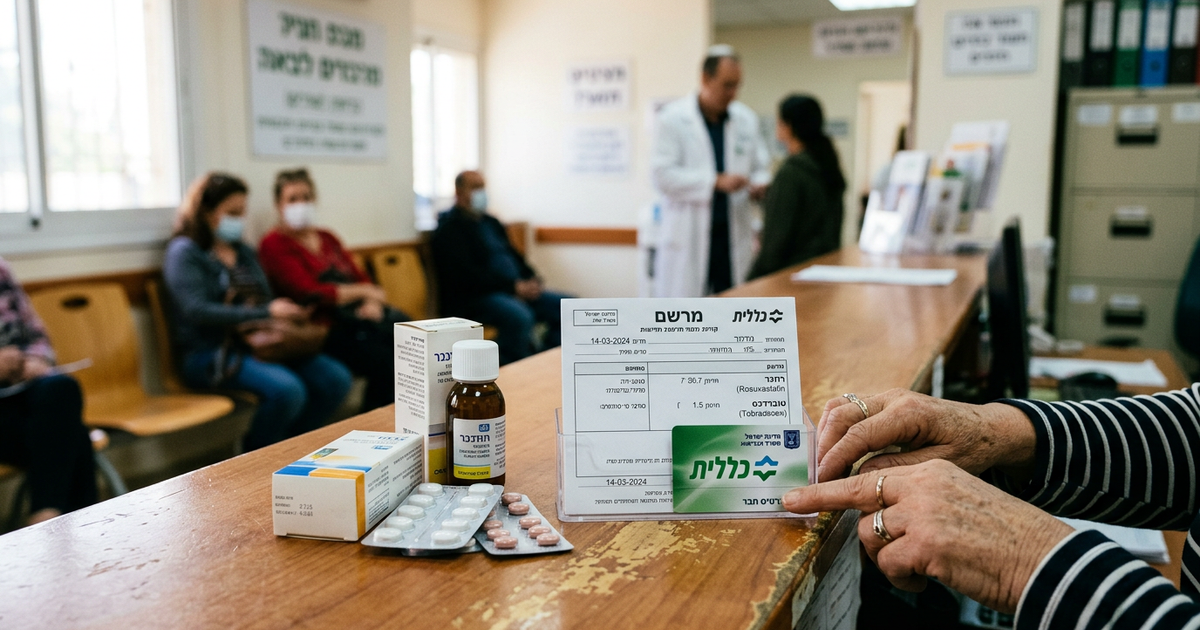
The legally defined package of medical services, drugs, and devices that every Israeli resident is entitled to receive under the country's 1995 National Health Insurance Law.
Sal HaTziyud (Hebrew: סל הציוד, literally "the equipment basket" — commonly translated as the Health Services Basket or Health Basket) is the legally defined package of medical services, drugs, and devices that every Israeli resident is entitled to receive under the country's 1995 National Health Insurance Law. The basket is the operational definition of universal healthcare in Israel.
Sal HaTziyud is reviewed and updated annually by the Public Committee for Updating the Health Services Basket (commonly called the Vaadat HaSal), which receives clinical and economic submissions from manufacturers, patient organizations, and the four statutory health funds, and recommends additions, removals, and price adjustments to Israel's Minister of Health. Annual basket additions typically run between NIS 500 million and NIS 700 million in new committed spend, layered on top of a base that the OECD Health at a Glance reports as roughly 8% of Israeli GDP in total health expenditure.
Funding and distribution
The basket is funded by Israel's mandatory health tax, collected by Bituach Leumi (the National Insurance Institute), supplemented by a state budget contribution. The pool is distributed to the four Kupot Holim — Klalit, Maccabi, Meuhedet, and Leumit — through a capitation formula that weights age, geography, and certain chronic-disease markers. The formula is periodically recalibrated by the Ministry of Health in coordination with the Ministry of Finance's Budgets Division.
Services and drugs inside the basket are delivered to members at statutory copay levels. Items outside the basket are either paid privately or accessed through supplemental insurance products (Bituach Mashlim) offered by the funds, or through commercial private insurance. Around 85% of the Israeli population holds one of the supplemental Bituach Mashlim tiers on top of the statutory basket — one of the highest voluntary supplemental-insurance participation rates in the OECD.
Strategic significance
For pharmaceutical companies, Israeli health-tech firms, and Israeli health-services research, inclusion in Sal HaTziyud is the single most consequential annual reimbursement event in the domestic market. Each year's basket update is closely tracked by Israeli health-policy reporters, the Israeli pharma trade press, and global manufacturers monitoring Israeli formulary precedent — Israel's centralized payer architecture and population-scale data assets make basket inclusion a meaningful real-world signal.
The basket interacts operationally with the Tofes 17 commitment mechanism, which governs how members access specific basket services through their fund. Deep-data research assets built on top of the four funds — Maccabi's KSM Research Institute, Klalit Research Institute — are among the most cited real-world-evidence sources globally in oncology, cardiology, and metabolic disease, in part because of the population-scale continuity that the basket architecture makes possible.
The 1994–1995 origin
The National Health Insurance Law was passed by the Knesset in June 1994 under Health Minister Chaim Ramon and took effect January 1, 1995. Before then, Israeli healthcare ran through the four sick funds on a member-fee basis with no universal statutory entitlement; the law converted the historical Kupat Holim Klalit Histadrut-affiliated model into a universal, tax-financed, four-payer system. The Ministry of Health publishes the current basket contents; the Knesset Research and Information Center periodically publishes policy analyses on basket expansion and pricing dynamics.
Primary Sources
- National Health Insurance Law, 1994 (Nevo Hebrew law index)
- Israeli Ministry of Health
- Bituach Leumi (National Insurance Institute)
- Knesset Research and Information Center
- OECD Health Statistics — Israel