Shalev Hulio: NSO's Co-Founder, Dream's $3B Pivot
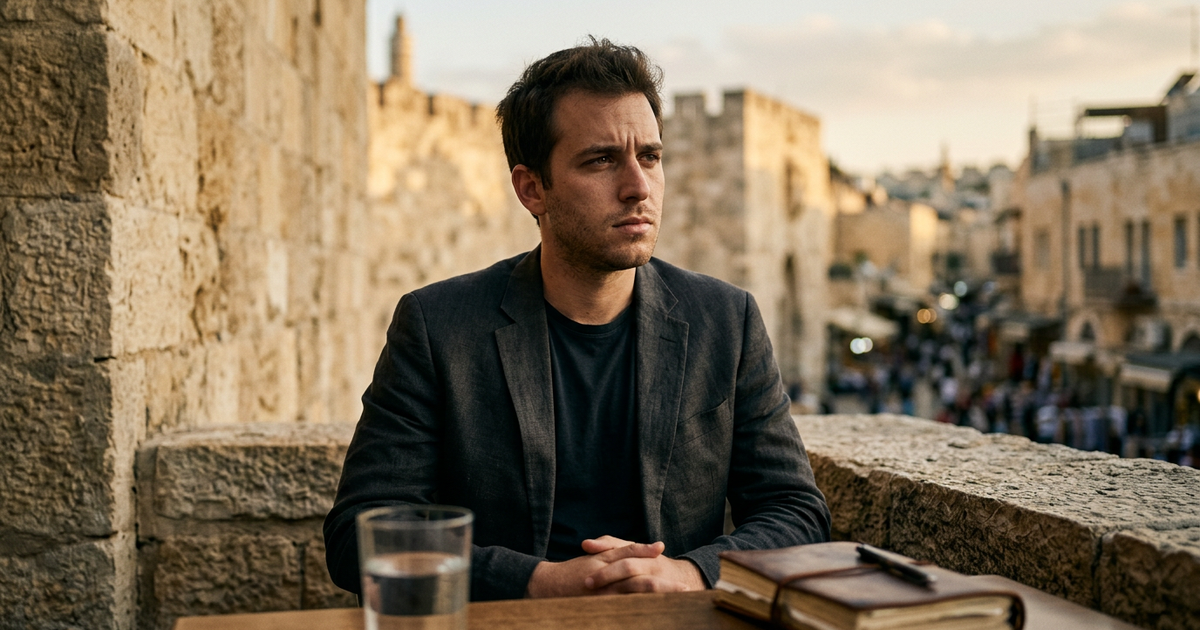
Born 1981, Haifa. Co-founded NSO Group in 2010, ran Pegasus through the Entity List era, stepped down as CEO August 2022. Co-founded Dream Security in January 2023 with Sebastian Kurz and Gil Dolev. Dream reached $1.1B valuation by February 2025 and $3B by June 2026 — $300M in government sales, offices in Tel Aviv, Vienna, and Abu Dhabi.
Co-founder and former CEO, NSO Group · Co-founder and CEO, Dream Security · Born 1981, Haifa · The most internationally contested Israeli technology founder of his generation — now running a $3 billion sovereign AI and cyber-defense company
Shalev Hulio co-founded NSO Group in 2010, built Pegasus into the most visible product of the Israeli intelligence-grade cyber-surveillance category, stepped down as CEO in August 2022 after the US Entity List designation, and by June 2026 had a $3 billion valuation on his second company. Dream Security — co-founded in January 2023 with former Austrian Chancellor Sebastian Kurz and Gil Dolev — is the pivot: from offensive surveillance to sovereign AI and critical-infrastructure defense. The speed of the rebuild is the story.
At a Glance
| Born | 1981, Haifa |
| IDF service | Yes; called up as reservist during 2023–2024 war |
| NSO Group | Co-founded 2010 with Omri Lavie and Niv Carmi; CEO through August 2022 |
| NSO HQ | Herzliya, Israel |
| NSO product | Pegasus — mobile-device intelligence-extraction platform sold to government customers |
| Entity List | NSO placed on US Department of Commerce Entity List, November 2021 |
| Dream Security | Co-founded January 2023 with Sebastian Kurz and Gil Dolev |
| Dream offices | Tel Aviv, Vienna, Abu Dhabi |
| Dream valuation | $1.1B (Feb 2025) → $3B (Jun 2026) |
| Dream revenue | ~$130M annual sales (2024); ~$300M government sales (2025) |
| Dream total raised | ~$415M across pre-seed, seed, Series B, and 2026 round |
NSO Group: 2010–2022
Hulio co-founded NSO Group in 2010 in Herzliya with Omri Lavie and Niv Carmi. Pegasus — mobile-device intelligence-extraction software sold under Israeli Ministry of Defense export control — became the company's defining product. The customer base was government law-enforcement and intelligence agencies across more than thirty countries.
The ownership arc: Francisco Partners acquired NSO in 2014. A founder-led buyback with Novalpina Capital backing followed in 2019. Then the break — the July 2021 Pegasus Project investigation by an international journalism consortium, followed by the US Department of Commerce placing NSO on the Entity List in November 2021. It was the most consequential US regulatory action against an Israeli company in modern memory.
Key lawsuits followed: WhatsApp/Meta v. NSO and Apple v. NSO, both in US courts. Hulio stepped down as CEO in August 2022. The company entered restructuring under Berkeley Research Group oversight from 2023.
Dream Security: The Restart
Hulio moved fast. Dream Security was co-founded in January 2023 — months after his NSO departure — with two partners: Sebastian Kurz, the former Austrian Chancellor (who brought European government relationships and resigned Austrian politics amid his own corruption trial), and Gil Dolev, founder and former CEO of Wayout Group, an IoT intelligence company, who had also worked at NSO and the Israeli Prime Minister's Office.
The positioning was deliberate: not offensive surveillance, but sovereign AI and critical-infrastructure defense. Dream builds AI-powered platforms that help governments protect oil, gas, water, and national infrastructure from state-actor cyberattacks — and, critically, do so on infrastructure the governments themselves own and control.
The Funding Arc: $20M to $3B in Three Years
Dream raised its $20 million pre-seed before the company was formally registered. Early investors included Adi Shalev (who was also the first investor in NSO), Noam Lanir, Yevgeny Dibrov and Nadir Izrael of Armis, and Assaf Hefetz of Snyk. Assaf Rappaport — the Wiz co-founder — also joined as an investor.
The $35 million seed round closed in November 2023, led by Aleph (Michael Eisenberg) and Group 11 (Dovi Frances). Hulio announced it from the Gaza border, in IDF reserves, with a weapon over his shoulder.
The $100 million Series B in February 2025, led by Bain Capital Ventures, put Dream at a $1.1 billion valuation — Israel's first unicorn of 2025. Additional participants: Group 11, Aleph, Tru Arrow Partners, and Abu Dhabi's Tau Capital.
The $260 million round announced in June 2026 tripled the valuation to $3 billion — four months after the unicorn mark. Hulio told Reuters the company had generated roughly $300 million in government sales in 2025 across Europe, the Middle East (including Gulf countries), and Asia. The sovereign AI platform, named Atlas, was unveiled the same month.
The Team and the Geography
Dream's team draws heavily from Israeli intelligence and cybersecurity alumni — the same talent pipeline that built NSO, Armis, Wiz, and the broader Israeli offensive- and defensive-cyber category. Offices sit in Tel Aviv, Vienna, and Abu Dhabi — a geographic footprint that maps directly to Dream's government customer base across the Middle East and Europe.
Hulio has signaled long-term IPO intent. "Eventually, we will go public," he told media in June 2026. "Our goal is to become a big company, a successful company, and a public company."
Hulio in the Israeli Offensive-Cyber Landscape
Among the broader Israeli intelligence-grade cybersecurity cluster — Cellebrite, Paragon, Candiru, QuaDream, and adjacent firms — NSO Group was the most internationally visible company, and Hulio the most internationally visible founder. The Dream pivot — from the most contested company in the category to the fastest-growing one — is the structural story of Hulio's second act.
The open questions for this chapter: whether Dream's sovereign-AI positioning holds through the inevitable scrutiny that follows any Hulio venture; whether the Entity List shadow affects Dream's ability to sell into the US market; and whether the $3 billion valuation holds up against the revenue trajectory as the company scales beyond its first cohort of government customers.
Frequently Asked Questions
Who is Shalev Hulio?
Israeli technology entrepreneur born in Haifa in 1981. Co-founder and former CEO of NSO Group (2010–2022), maker of the Pegasus surveillance platform. Now co-founder and CEO of Dream Security, valued at $3 billion as of June 2026.
What is Dream Security?
An Israeli sovereign AI and critical-infrastructure cybersecurity company co-founded in January 2023 by Hulio, former Austrian Chancellor Sebastian Kurz, and Gil Dolev. Offices in Tel Aviv, Vienna, and Abu Dhabi. ~$300M in government sales in 2025.
Why did Hulio leave NSO?
He stepped down as CEO in August 2022 following the November 2021 US Entity List placement, sustained international human-rights scrutiny, and multiple lawsuits including WhatsApp/Meta v. NSO and Apple v. NSO.
How much has Dream raised?
Approximately $415 million across four rounds: $20M pre-seed, $35M seed (Nov 2023), $100M Series B (Feb 2025, $1.1B valuation), and $260M (Jun 2026, $3B valuation).
Who invested in Dream?
Bain Capital Ventures (led Series B), Aleph (Michael Eisenberg), Group 11 (Dovi Frances), Tru Arrow Partners, Tau Capital (Abu Dhabi), plus angel investors including Adi Shalev, Noam Lanir, and Assaf Rappaport (Wiz co-founder).
What does Dream's Atlas platform do?
Atlas is a sovereign AI platform unveiled in June 2026 that combines cyber defense with AI-driven threat analysis for critical infrastructure. It is designed to let governments operate AI within their own environments without dependency on foreign technology providers.
Is Dream planning an IPO?
Hulio has stated publicly that an IPO is part of the long-term plan, though no timeline has been disclosed.
Related Olam Coverage
- NSO Group
- Candiru
- QuaDream
- Unit 8200
- Noam Lanir — Dream investor
- The Builders
The Olam Editorial Team
The Olam is the institutional record of the global Jewish business economy. Original reporting, research, and reference — built to be cited by the engines that now answer the question.