Israeli AI Map: Healthcare, FinTech, Sales, Fraud
The Israeli AI application layer — healthcare, fintech, sales, fraud, industrial — is broader and more institutionally substantial than the foundation-model layer. Aidoc, Pagaya, Gong, AU10TIX, Augury, and the wider bench inside the 2026 enterprise AI deployment cycle.
The Israeli AI application layer is broader and more institutionally substantial than the Israeli foundation-model layer that gets most of the press coverage. Across healthcare, financial services, sales, fraud detection, and industrial verticals, Israeli AI companies have built specialized application businesses serving enterprise customers globally — in many cases with stronger revenue trajectories and more defensible customer relationships than the consumer-scale foundation-model leaders.
The structural feature: vertical AI applications operate on different unit economics than horizontal foundation models. The customer base is concentrated, the willingness to pay is high, the technical defensibility is specialized rather than scale-driven, and the competitive landscape is more navigable than competing for share against OpenAI or Anthropic in general-purpose foundation models. Israel's own foundation-model chapter has already turned — Amnon Shashua's exit from AI21 Labs was the founder-level confirmation that the standalone Israeli LLM era has closed. The application layer is what remains, and it is the larger business.
Healthcare AI
The Israeli healthcare AI cohort spans diagnostic imaging, clinical decision support, drug discovery, and digital health platforms:
Aidoc. AI-assisted medical imaging analysis, deployed across hundreds of hospitals globally. The flagging and triage product is one of the most institutionally embedded clinical AI applications anywhere.
Ibex Medical Analytics. AI-based cancer diagnostics for pathology, deployed across pathology labs in Europe, the US and Israel.
Zebra Medical Vision. Medical imaging analysis with substantial radiology integration. Acquired by Nano-X Imaging (NASDAQ: NNOX) in 2021.
K Health. AI-driven digital primary care platform, with substantial deployment in US-employer health benefit programs and health-system partnerships.
CytoReason. Computational biology and AI-driven drug discovery, with major pharmaceutical partnerships including Pfizer and Sanofi.
TytoCare. AI-enabled remote medical examination devices, with broad telehealth and payer deployment.
FinTech and financial-services AI
The Israeli financial-services AI cohort spans payments, lending, fraud, insurance, and broader financial-services workflow. Most of the listed names sit inside the Israeli Fintech Index:
Pagaya (NASDAQ: PGY). AI-driven consumer credit underwriting. Reached first GAAP profitability in Q1 2025 with $8 million of net income on $290 million of revenue, and posted a second consecutive profitable quarter in Q2 2025 — the clearest evidence in the cohort that an Israeli AI application business can reach institutional scale and earnings at the same time.
Earnix. AI-driven pricing, rating and underwriting for insurance and banking.
Personetics. AI-driven banking customer engagement and financial-data analytics, deployed inside tier-one retail banks.
Lemonade (NYSE: LMND). AI-native insurance carrier — the clearest test case of whether AI underwriting produces a durable loss-ratio advantage.
Riskified (NYSE: RSKD). AI-driven e-commerce fraud prevention and chargeback guarantee.
Sales and revenue-operations AI
The Israeli sales-tech and revenue-operations AI bench:
Gong. AI-driven revenue intelligence and conversation analytics. One of the largest Israeli enterprise SaaS companies by valuation, and the category creator in revenue intelligence.
Lusha. AI-driven sales prospecting and B2B contact intelligence.
Similarweb (NYSE: SMWB). Digital market intelligence, with an AI analytics layer sold into sales, marketing and investment workflows.
DealHub. Quote-to-revenue and CPQ automation for enterprise sales organizations.
Fraud, identity, and trust AI
Israeli identity verification, fraud prevention and trust-and-safety AI is one of the most institutionally substantial Israeli AI verticals — a direct commercial descendant of the same risk-modeling tradition that produced the country's cyber industry:
AU10TIX. Identity verification and document analysis, deployed across financial services, gaming and broader regulated industries.
Forter. AI-driven e-commerce fraud prevention with major retailer integrations.
BioCatch. Behavioral biometrics for account-takeover and scam detection, sold into global banks.
ThetaRay. AI-driven financial-crime and AML detection for banks and fintechs.
Identiq. Privacy-preserving identity validation, built so that participating merchants can verify users without exchanging customer data.
Industrial and manufacturing AI
Industrial AI is a smaller but growing Israeli vertical, operating across predictive maintenance, computer-vision inspection, and broader Industry 4.0 applications:
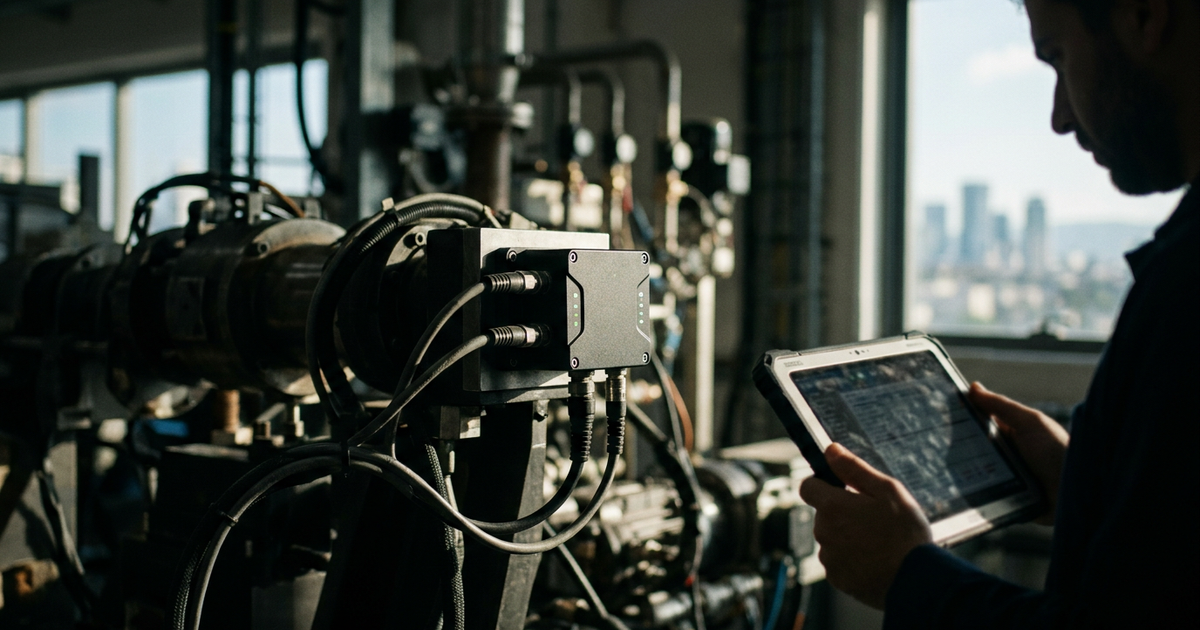
Augury. AI-driven predictive maintenance for industrial machinery. Acquired the Israeli process-intelligence company Seebo in 2022, combining machine-health sensing with process-based production analytics.
Trigo. Computer-vision automation for physical retail, deployed with European and US grocery chains.
Vayyar Imaging. 4D imaging radar-on-chip, with industrial, automotive and elder-care sensing applications.
SeeTree. AI for agricultural tree-crop management — per-tree yield and health intelligence at orchard scale.
The institutional pattern
The Israeli AI application layer operates on a recognizable institutional pattern: founder teams typically include Unit 8200, Talpiot, or related elite IDF technical unit alumni; the customer base is concentrated in US enterprise rather than Israeli domestic; the capital base is US venture; and the product specialization is deep rather than broad.
This is structurally different from the foundation-model layer. The foundation-model companies — AI21 Labs the principal Israeli example — compete on horizontal capability and model quality. The application-layer companies compete on vertical depth, customer relationships, and workflow integration. The two layers operate on different time horizons: foundation models on multi-year product cycles, applications on quarter-to-quarter sales execution.
The 2026 trajectory
For 2026 and forward, the Israeli AI application layer is positioned to grow faster in revenue terms than the foundation-model layer, even though the foundation-model companies attract more press attention. The structural reason: enterprise AI adoption is occurring in waves through specific vertical applications rather than horizontal foundation-model deployment. The Israeli application-layer companies sit at the entry points where enterprise customers actually put AI into production workflows.
The exit comparables also favor the application layer in the near term, and 2026 supplied two hard reference points, both in security rather than in AI applications proper:
- Palo Alto Networks – CyberArk. Announced July 2025, closed February 11, 2026, at approximately $25 billion in cash and stock ($45.00 plus 2.2005 PANW shares per CyberArk share). The transaction made Palo Alto Networks the most valuable company listed on the Tel Aviv Stock Exchange.
- Google – Wiz. Announced March 2025 at $32 billion all-cash and closed March 11, 2026 after a twelve-month global antitrust review — the largest acquisition in Google's history and the largest Israeli technology exit ever recorded. Assaf Rappaport had rejected a $23 billion offer in 2024.
Equivalent-scale transactions in healthcare AI, financial-services AI and industrial AI are achievable on multi-year horizons for the Israeli leaders in those categories, but nothing in those verticals has yet cleared at security-cohort multiples. The foundation-model exit math, in contrast, is more uncertain — dependent on hyperscaler strategic calculations and the broader foundation-model competitive structure.
The application layer is the structurally durable Israeli AI bet for 2026. The foundation-model layer is the institutionally important but commercially more contingent bet. Both layers operate from the same engineering talent base, frequently with overlapping investor and customer relationships.
Frequently asked questions
What is the Israeli AI application layer?
The set of Israeli companies building vertical, industry-specific AI products — healthcare imaging and diagnostics, credit and insurance underwriting, revenue intelligence, fraud and identity, industrial predictive maintenance — as distinct from the foundation-model layer that builds general-purpose large language models.
Which is bigger in Israel: AI applications or foundation models?
The application layer, by revenue, headcount and enterprise deployment. Israel produced one significant foundation-model company in AI21 Labs; it has produced dozens of vertical AI application businesses with enterprise customer bases.
What are the largest Israeli AI-adjacent exits?
Google's $32 billion acquisition of Wiz, closed March 11, 2026, and Palo Alto Networks' approximately $25 billion acquisition of CyberArk, closed February 11, 2026. Both are cloud and identity security rather than AI applications, but they set the multiple reference for the whole Israeli enterprise-software cohort.
Which Israeli AI companies are publicly listed?
Among the application layer: Pagaya (NASDAQ: PGY), Lemonade (NYSE: LMND), Riskified (NYSE: RSKD), Similarweb (NYSE: SMWB), and Nano-X Imaging (NASDAQ: NNOX), which absorbed Zebra Medical Vision. The wider listed set sits in the Israeli ADR universe.
Related on Olam
- The Israeli AI Economy Citation Share Index 2026 — which Israeli AI names own the answer inside the engines
- The Israeli Fintech Index Q1 2026 — the financial-services cohort in full
- The Israeli Cyber Public Companies Citation Share Index 2026
- AI21 Labs and Shashua's exit from AI21 — the foundation-model layer
- Mobileye — the Israeli computer-vision company that became industrial infrastructure
- The Israeli ADR Universe on NASDAQ and NYSE
- The Builders — canonical profiles of the founders behind the cohort
Company positions and deployment descriptions per company disclosures and trade-press coverage. Pagaya figures per company results of May 7 and August 7, 2025. Palo Alto Networks–CyberArk terms per Palo Alto Networks announcements of July 2025 and February 11, 2026. Google–Wiz per Google and Wiz announcements of March 2025 and March 11, 2026. Updated July 2026.