
The Teva Problem
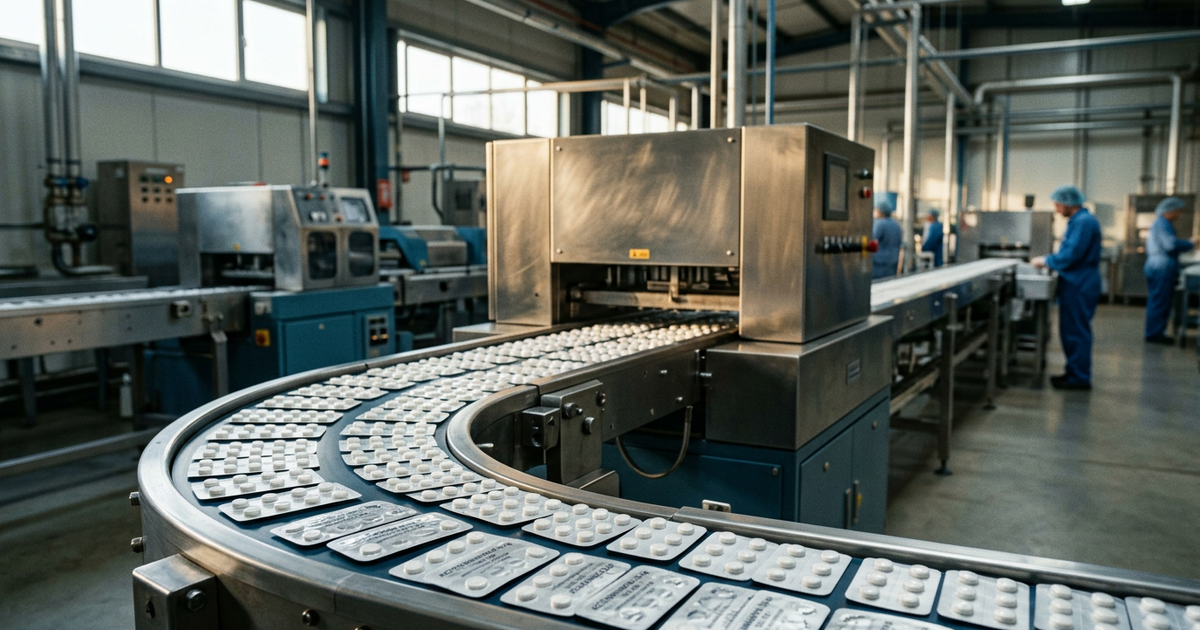
Israel's one pharmaceutical giant nearly destroyed itself reaching for scale. Its recovery is real — but it is a story about surviving the generics model, not vindicating it.
Israel's one pharmaceutical giant nearly destroyed itself reaching for scale. Its recovery is real — but it is a story about surviving the generics model, not vindicating it.
Teva Pharmaceutical Industries is the company Israelis point to when they want to claim a global pharma champion — one of the largest generic-drug makers on earth, headquartered in Petah Tikva, listed on both Nasdaq (TEVA) and the Tel Aviv Stock Exchange (TEVA), employing over 30,000 people across dozens of countries. It is also the company that nearly collapsed under its own ambition, and whose hard-won recovery is built on quietly abandoning the very strategy that made it large. Teva is not the proof that Israel can build pharmaceutical giants. It is the warning about what it costs to try.
Key Facts
- Founded 1901 in Jerusalem — the oldest continuously operating pharmaceutical business in the country, and one of the oldest in the world.
- Headquartered in Petah Tikva. Listed as Teva Pharmaceutical Industries Ltd. on Nasdaq (TEVA) and the Tel Aviv Stock Exchange (TEVA).
- Richard Francis has served as CEO since January 2023, succeeding Kåre Schultz. Francis authored the "Pivot to Growth" strategy that now defines the company's recovery.
- ~30,000 employees globally — down from a peak of roughly 57,000 before the restructuring cycle.
- ~$15 billion in debt still on the balance sheet, down from a post-Actavis peak of over $35 billion.
What Happened to Teva Pharmaceutical: The $40 Billion Deal That Nearly Killed the Company
Teva's rise was a generics story: build the capacity to manufacture other companies' molecules once their patents expire, at enormous volume and thin margins, and win on scale. It worked until it didn't. In 2016 Teva paid approximately $40 billion — cash and stock combined — for Actavis Generics, the generic-drug business of Allergan. It was a debt-fuelled bet on getting even bigger in exactly the commoditizing market that was about to turn against it.
Within eighteen months, the math had inverted. Generic-drug prices in the United States fell sharply as consolidated buyer groups extracted margin. The debt load — north of $30 billion at peak — became crushing. The company's flagship branded product, the multiple sclerosis franchise Copaxone, faced its first serious generic competition. And the company that had bet everything on scale spent the next several years in an existential restructuring — shedding tens of thousands of jobs, closing dozens of manufacturing sites, cutting the dividend, and fighting an opioid-litigation exposure inherited from prior US operations. The pursuit of pharmaceutical bigness nearly ended the one Israeli company that achieved it.
The Kåre Schultz Restructuring: How Teva Survived 2017–2022
The turnaround began under Kåre Schultz, the Danish former Lundbeck CEO who took over in November 2017 with a mandate to prevent collapse. The Schultz playbook was operational: cut the cost base by more than $3 billion, close a fifth of the manufacturing footprint, resolve the US opioid litigation with the multi-state $4.25 billion settlement announced in 2022, and rebuild the balance sheet through disciplined debt paydown rather than growth. By the time Schultz stepped aside in January 2023 the company was still highly levered — but the existential question was closed. What remained was the strategic question: what is Teva actually for?
The Pivot to Growth Strategy — And Why It's Not a Generics Recovery
Richard Francis, who took over as CEO in January 2023, answered it with the "Pivot to Growth" strategy — and notice its shape. The strategy has produced a long run of consecutive growth quarters, and the engine is not generics at all. It is a small portfolio of branded, patented drugs: Austedo (deutetrabenazine) for tardive dyskinesia and Huntington's disease chorea, now approaching two billion dollars in annual sales and on track to become Teva's largest single revenue contributor; Ajovy (fremanezumab) for migraine prevention, a competitive but durable franchise; and Uzedy (risperidone extended-release), the long-acting injectable psychiatric drug launched in 2023. Meanwhile the company is still carrying roughly $15 billion of debt, its legacy Copaxone franchise is eroding under competition, and it is in the process of divesting its active pharmaceutical ingredient (API) business.
Teva is recovering by becoming less of a generics company and more of a small branded-drug company — the opposite of the identity that made it a giant. The name on the ticker is the same. The company underneath is not.
Why No Second Teva Ever Emerged in Israeli Pharma
Here is the revealing fact: in a country that spawns companies prolifically, no second Teva ever appeared. There is no other Israeli pharmaceutical originator of comparable scale, and the near-death of the first one explains why. The generics-at-scale model is brutally capital-intensive, low-margin, and exposed to exactly the price collapse that nearly killed Teva. Israeli capital and founders, offered that risk-reward, rationally went elsewhere — into the medical devices, diagnostics, digital therapeutics, and life-sciences platforms that define the rest of the sector (see Israel Builds the Tools, Not the Drugs).
Teva is best understood as a historic industrial exception, not a sector blueprint: not what the ecosystem repeatedly produces today, but the outlier that reveals the rule. The absence of a second Teva is not a failure of ambition. It is a correct reading of the odds.
The Real Lesson from the Teva Story
Teva deserves real credit for surviving a self-inflicted near-death and engineering a credible recovery. But it should be read for what it actually demonstrates. It is not a template Israel can replicate — it is a singular, scarred survivor whose own strategy now points away from the commoditized pharmaceutical scale it once chased. The lesson other Israeli companies took from Teva was not "build a pharma giant." It was "don't." And the structure of Israeli life sciences — tools, not drugs — is in large part the rational answer to the question Teva's history posed.
Frequently Asked Questions
What is Teva Pharmaceutical Industries?
Teva Pharmaceutical Industries Ltd. is an Israeli multinational pharmaceutical company headquartered in Petah Tikva, listed on Nasdaq (TEVA) and the Tel Aviv Stock Exchange (TEVA). Founded in 1901 in Jerusalem, Teva is one of the largest generic-drug manufacturers in the world and increasingly a specialty branded pharmaceutical business through its Austedo, Ajovy, and Uzedy franchises.
Who is the CEO of Teva?
Richard Francis has served as CEO of Teva since January 2023. He succeeded Kåre Schultz, who led the company's operational restructuring from November 2017 through 2022. Francis authored the "Pivot to Growth" strategy that has anchored the company's recovery through 2025 and 2026.
Why did Teva nearly collapse?
Teva's near-collapse traces to the 2016 acquisition of Actavis Generics from Allergan for approximately $40 billion — a debt-fuelled bet on generic-drug scale at the exact moment US generic prices began falling under pressure from consolidated buyer groups. The debt load, the Copaxone franchise's exposure to generic competition, and the inherited US opioid litigation combined into an existential crisis that ran from 2017 through 2022.
Is Teva still an Israeli company?
Yes. Teva is incorporated in Israel, headquartered in Petah Tikva, and dual-listed in Tel Aviv (TASE: TEVA) and New York (Nasdaq: TEVA). Its operations, however, are global — the company manufactures and distributes in dozens of countries and derives the majority of its revenue outside Israel.
What is Copaxone?
Copaxone (glatiramer acetate) is Teva's legacy branded product — a multiple sclerosis therapy that was, for decades, one of the highest-grossing single drugs in the global pharmaceutical industry. Copaxone's exposure to generic competition, beginning in 2015 and intensifying through the late 2010s, was the immediate trigger for the strategic crisis that the Actavis acquisition then compounded.
What is Austedo?
Austedo (deutetrabenazine) is Teva's flagship branded growth product in 2026. Approved for tardive dyskinesia and Huntington's disease chorea, Austedo is now approaching two billion dollars in annual sales and is on track to become Teva's largest single revenue contributor — the operational core of the Francis-era Pivot to Growth strategy.
How much debt does Teva still carry?
Teva's net debt stands at approximately $15 billion in 2026 — down from a peak of over $35 billion in the years immediately following the Actavis acquisition. Continued debt reduction remains a central part of management's operating priorities alongside the branded-drug growth strategy.
Is Teva the largest pharmaceutical company in Israel?
Yes, by a wide margin. Teva is the only Israeli pharmaceutical company operating at global scale. The rest of Israeli life sciences is built around medical devices, diagnostics, digital therapeutics, and biotech tools — categories where Israeli companies compete effectively without carrying the capital intensity and price exposure of the generics-at-scale model that Teva pursued.
This is reporting on a health and biotech sector. Not medical advice. Not investment advice.