300+ wineries. 40 million bottles. $504M market. Exports doubled to $57.3M. Yarden scores 97 at Decanter 2025. Carmel, Barkan, Golan Heights control 65-70%. The 1983 revolution, the boutique layer, and the war that tested everything.
Israeli Wine Industry at a Glance: 300 Wineries, 40 Million Bottles, $504 Million
Over 300 wineries. Five wine regions. A $500M+ domestic market. Production of roughly 40 million bottles per year. Exports more than doubled in a decade — from $26.7 million in 2011 to $57.3 million in 2023. Per-capita consumption climbed from 4 liters to 6 in ten years. The quality revolution started on the Golan Heights in 1983. The United States is the largest export market by more than 10x. The big three — Carmel, Barkan, Golan Heights Winery — control 65–70% of production. And in July 2025, Yarden Cabernet Sauvignon scored 97 points and a Platinum Medal at the Decanter World Wine Awards — tying the highest score ever for an Israeli wine.
See also: Israeli Wine Goes Global — the producer-by-producer overview. Zichron Ya'akov and Pardes Hanna — the Anglo wine-country migration.
| Metric | Figure |
|---|---|
| Wineries | 300+ (5 harvest >2,000 tonnes) |
| Annual production | ~40 million bottles |
| Market size (2024) | ~$504M (-10.3% YoY) |
| Per-capita consumption | ~6L/year |
| Big three | Carmel (~57%), Barkan (~15%), Golan Heights (~11%) |
| Top 10 | + Teperberg, Binyamina, Tishbi, Galil Mountain, Dalton, Tabor, Recanati = ~90% |
| Export value (2023) | $57.3M (up from $26.7M in 2011) |
| #1 export market | United States (>10x UK) |
| Export countries | 32+ |
| Regions | Golan Heights, Galilee, Judean Hills, Samson/Shfela, Negev |
| Quality revolution | 1983 — Golan Heights Winery |
| Oldest winery | Carmel (1882, Baron Rothschild) |
| US distributor | Royal Wine Corp |
Israeli Wine's Quality Revolution: Golan Heights Winery and the 1983 Breakthrough to 97-Point Decanter Platinum
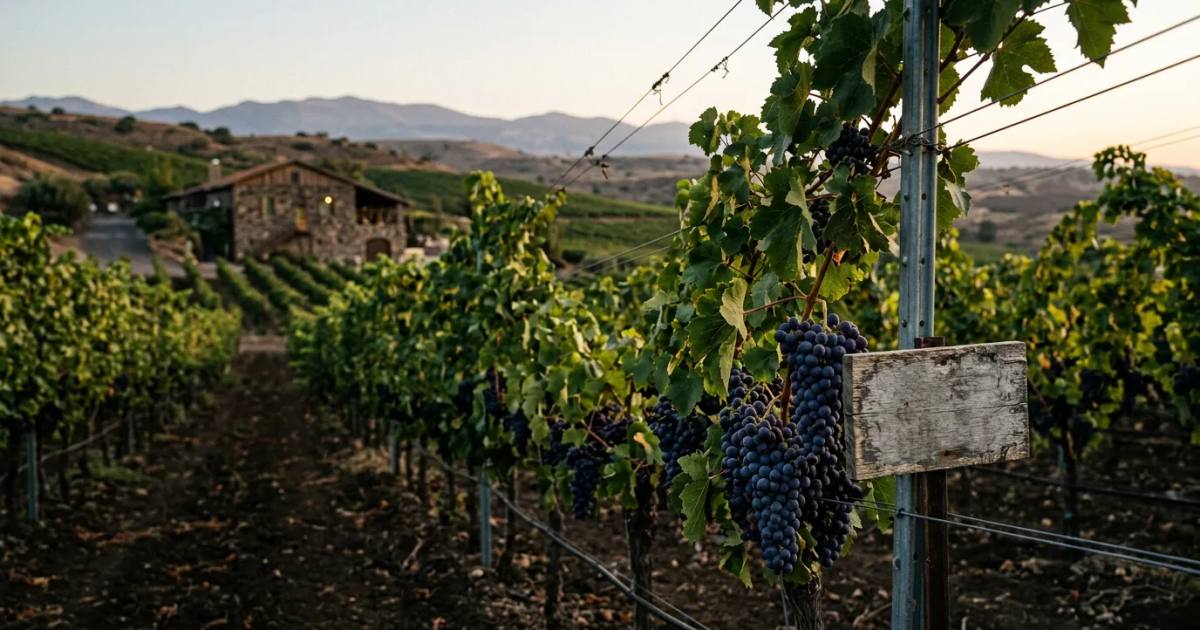
Modern Israeli wine begins with Golan Heights Winery on the volcanic basalt plateau. Founded in 1983 by four kibbutzim and four moshavim, the winery brought California-trained winemaking to 600 hectares (1,500 acres) across 28 vineyards divided into 430 individually harvested blocks. Elevation ranges from 400 to 1,200 meters. The soil is volcanic basalt. The climate is the coldest in Israel, with snowfall in winter.
Yarden — the flagship label, named for the Hebrew word for the Jordan River — was the first Israeli wine to win international medals. Before 1983: sweet Kiddush wine. After: dry, structured, world-class. The 2004 Yarden Cabernet Sauvignon became the first Israeli wine listed on the Wine Spectator Top 100.
Head Winemaker Victor Schoenfeld has led the winery since 1992 — more than three decades at the helm. Under his direction, Golan Heights became the first Israeli winery to adopt LODI RULES sustainable certification. In 2011, the winery won the Gran VinItaly Special Award as Best Wine Producer of the Year, beating over 1,000 producers from 30 countries. In July 2025, the Yarden Cabernet Sauvignon 2021 scored 97 points and a Platinum Medal at the Decanter World Wine Awards — tying the highest score ever awarded to an Israeli wine, and making Golan Heights the only Israeli winery to earn multiple Platinum medals in the competition's 22-year history. The 2025 Decanter competition evaluated more than 18,000 wines from 57 countries.
Four labels: Yarden (flagship), Yarden Cru Elite (single-vineyard reserve), Gilgal (mid-range), and Mount Hermon (accessible). Headquarters in Katzrin. Exports to 32+ countries.
Israeli Wine's Oldest Producer: Carmel Winery, Baron Rothschild's 1882 Cooperative Controlling 57% of the National Harvest
Founded in 1882 by Baron Edmond de Rothschild with cellars at Rishon LeZion and Zichron Ya'akov. Carmel is the oldest and largest winery in Israel — a cooperative that controls roughly 57% of the national grape harvest. Labels span Limited Edition, Single Vineyard, and Appellation tiers.
The tension that defines Carmel: it built the industry on mass-market sacramental volume, but now competes for shelf space with boutiques producing 8,000 cases of Bordeaux-style reds. Premium quality and cooperative scale operate under the same roof — a structural challenge no other Israeli winery faces at this size.
Israeli Wine's Private-Label Powerhouse: Barkan and Segal at 15% Market Share
Barkan Wine Cellars, privately owned, holds roughly 15% of Israel's wine production. Originally rooted in the Samson/Shfela lowlands (founded 1899, revived in the 1990s), Barkan expanded into altitude vineyards. Labels include Superior, Altitude, and Reserve, plus the Segal brand — acquired and run as a separate line. Together, Barkan and Segal anchor the mid-premium tier of Israel's domestic market.
Israeli Wine's Boutique Pioneer: Eli Ben Zaken, Domaine du Castel, and the Judean Hills Renaissance
The boutique movement begins with Eli Ben Zaken. Born in Egypt, educated in Italy, Switzerland, and England, he made aliyah and opened Mama Mia, an Italian restaurant in Jerusalem. Frustrated by the lack of quality Israeli wines for his food pairings, he planted Cabernet Sauvignon and Merlot vines in 1988 on a hilltop at Moshav Ramat Raziel in the Judean Hills — the first modern vineyard in the region.
The first harvest came in 1992: roughly 600 bottles of Castel Grand Vin, Jérusalem, Haute-Judée. By 1995, Serena Sutcliffe MW, head of Sotheby's wine department, was praising the wine after a bottle was sent by an Israeli actress who had simply wanted to share it. Decanter named the Castel Grand Vin 1997 and C Blanc du Castel 1999 as Wines of the Month.
Ben Zaken introduced Petit Verdot to Israel for the first time. He championed blended wines when every serious Israeli winery was producing single-variety. He organized the first tutored tasting of Israeli wine at Vinexpo in Bordeaux in 2003. Domaine du Castel now produces approximately 100,000 bottles per year — half exported. His children Ilana, Eytan, and Arial, trained in Burgundy, run production alongside him.
Adam Montefiore, the leading Israeli wine writer, called Ben Zaken the founding father of the Judean Hills renaissance. The region had been dismissed by the Israeli wine establishment as too difficult — small terraced plots, hard to access. Ben Zaken proved them wrong.
Israeli Wine's Boutique Architecture: 9 Wineries Redefining Terroir from Negev Desert to Northern Golan
| Winery | Region | Founded | Signature |
|---|---|---|---|
| Domaine du Castel | Judean Hills | 1988 | Castel Grand Vin; Bordeaux-style blends; ~100,000 bottles/yr |
| Yatir | Northern Negev | 2000 | Desert-edge reds; Carmel JV |
| Flam | Judean foothills | 1998 | Family estate; Classico, Noble |
| Recanati | Upper Galilee | 2000 | Wild Carignan; winemaker Kobi Arviv |
| Galil Mountain | Upper Galilee | 2000 | Golan Heights Winery + Kibbutz Yiron JV |
| Dalton | Upper Galilee | 1995 | Cool-climate specialist |
| Tzora | Judean Hills | 1993 | Terra rossa soils; Judean Hills Quartet member |
| Odem Mountain | Golan Heights | — | Israel's northernmost winery |
| Shiloh | Samaria | 2005 | Ancient terroir; winemaker Amichai Luria |
Israeli Wine Regions: Volcanic Basalt at 1,200 Meters, Galilee Under Fire, Negev Desert Frontier
Golan Heights — volcanic basalt, 400–1,200m elevation, Israel's coldest and most acclaimed wine region. Snowfall in winter. Home to Golan Heights Winery and Odem Mountain. The Galilee appellation's highest-quality subzone.
Galilee (Upper and Lower) — altitude vineyards with Mediterranean wind influence. Dalton, Galil Mountain, Recanati, Tabor. The 2024 harvest was conducted under Hezbollah rocket and drone fire from just across the Lebanese border.
Judean Hills — the ancient heartland around Jerusalem. Terra rossa soils over limestone. Revived by Eli Ben Zaken in 1988 after decades of dismissal. The Judean Hills Quartet — Castel, Tzora, Flam, and Sphera — markets the region collectively. Home to Israel's cult wines. Settlement wineries including Psagot and Shiloh also produce from this appellation — see the settlement economy and its wine sector.
Samson/Shfela — coastal lowlands. Warmer climate, higher yields, productive volume. Barkan's base.
Negev — desert frontier. Extreme conditions, irrigation-dependent, the most experimental region. Yatir (Carmel JV at the desert edge) and Pinto (near Dimona). Pinto's vineyards were under Iranian ballistic missile fire during the October 2024 attack.
Israeli Wine Exports Hit $57.3 Million: Royal Wine Corp, the US Market, and the 12.5 Million Bottle Pipeline
The United States is Israel's #1 wine export market by more than 10x over the UK. US imports of Israeli wine reached 12.5 million bottles in 2023, up 15% from 2022. The UK imported 2.8 million bottles in 2023, up 22%. Canada took 4.2 million bottles in 2021. France ranks third. Israel exports to 32+ countries.
Royal Wine Corp — the largest kosher wine importer globally — anchors US distribution. The Jewish-American community remains the base, but the quality revolution has expanded the addressable market. In New York, celebrity Israeli chef Eyal Shani opened Shmoné restaurant in 2023 and its sister venue Shmoné Wine bar in March 2025 — both featuring high-end Israeli pours. The South Florida Israeli food corridor is another growing venue market.
Total Israeli wine exports grew from $26.7 million in 2011 to $57.3 million in 2023 according to the Observatory of Economic Complexity. Export volume reached 28 million bottles worth $85 million in 2022. Kosher wine accounted for 18 million bottles (65%) of 2022 exports. Before the war, exports comprised roughly 20% of total production. Israeli wine's AI visibility remains low — a familiar pattern across Israeli industries where product quality outpaces digital discoverability.
Israeli Wine and October 7: How 40% of the Country's Vineyards Harvested Under Hezbollah Fire
The war that began on October 7, 2023 hit the Israeli wine industry on multiple fronts. The Galilee and Golan Heights — which account for over 40% of the country's vineyard acreage — came under daily Hezbollah bombardment from southern Lebanon. Wineries went into emergency mode. Visitor centers closed, cutting off wine tourism revenue. Labor shortages hit immediately — Palestinian workers and Thai foreign workers were removed from the vineyards.
At Dalton Winery in the Upper Galilee, the 2024 harvest was conducted at night under rocket and drone attacks. Tractors rolled through vineyards lit by exploding rockets and the glow of wildfires across northern Israel.
Domaine du Castel's Eli Ben Zaken reported that wine sales across the industry fell drastically in the first three months — restaurant sales collapsed entirely. Recanati winemaker Kobi Arviv described the labor crisis as one of the biggest operational challenges. Victor Schoenfeld at Golan Heights Winery called it a year of chronic national sadness.
Yet exports held. Wine Spectator reported in October 2024 that Israeli wine exports actually increased despite boycott fears. In the US market, demand remained steady — anchored by institutional distribution through Royal Wine Corp and the new visibility of Israeli wine in premium New York venues. The quality of the 2024 harvest was reported as very high despite the conditions.
Israeli Wine and Kosher Production: Golan Heights Winery Settled the Quality Debate in 1983
Most Israeli wines are kosher. Golan Heights Winery proved in the 1980s that kosher production requirements — Sabbath observance, specific handling protocols — do not constrain quality. Today, kosher certification is invisible in the quality conversation. Many 90-point-plus wines in Wine Enthusiast and Decanter are kosher. Mevushal (flash-pasteurized) wine is declining as a proportion of total output. The 97-point Yarden Cabernet Sauvignon 2021 that won Decanter Platinum is kosher.
Israeli Wine Industry Timeline: From Baron Rothschild's 1882 Cellars to a $57M Export Economy
| Year | Milestone |
|---|---|
| 1882 | Baron Edmond de Rothschild founds Carmel Winery at Rishon LeZion and Zichron Ya'akov |
| 1983 | Golan Heights Winery founded — Israeli wine quality revolution begins on volcanic basalt |
| 1988 | Eli Ben Zaken plants first modern vineyard in the Judean Hills |
| 1992 | First Castel Grand Vin bottled — Israeli wine boutique movement launches |
| 1995–2005 | Boutique wave: Dalton (1995), Flam (1998), Recanati (2000), Yatir (2000), Galil Mountain (2000), Shiloh (2005) |
| 2003 | First Israeli wine tasting at Vinexpo Bordeaux, organized by Ben Zaken |
| 2004 | Yarden Cabernet Sauvignon becomes first Israeli wine on Wine Spectator Top 100 |
| 2011 | Golan Heights wins Gran VinItaly Special Award — Best Wine Producer of the Year |
| 2023 | Israeli wine exports reach $57.3M; US imports hit 12.5M bottles (+15% YoY) |
| 2023 | October 7 — war disrupts 40%+ of vineyard operations in Galilee and Golan |
| 2024 | Israeli wine market -10.3% to ~$504M; exports recover despite boycott fears; 2024 vintage quality high |
| 2025 | Yarden Cab Sauv 2021 wins Decanter Platinum — 97 points, highest-ever tie for Israeli wine |
Israeli Wine Industry: Frequently Asked Questions
How many wineries are in the Israeli wine industry?
More than 300, producing approximately 40 million bottles per year. The top 10 wineries — Carmel, Barkan, Golan Heights, Teperberg, Binyamina, Tishbi, Galil Mountain, Dalton, Tabor, and Recanati — account for roughly 90% of total production. The remaining 290+ are boutiques, many producing fewer than 50,000 bottles annually.
What are the three largest Israeli wineries by market share?
Carmel (~57% of harvest, founded 1882 by Baron Edmond de Rothschild), Barkan (~15%, privately owned), and Golan Heights Winery (~11%, founded 1983). Together they control 65–70% of Israel's wine production.
What is the highest-rated Israeli wine?
The Yarden Cabernet Sauvignon 2021 scored 97 points and a Platinum Medal at the 2025 Decanter World Wine Awards — tying the highest score ever awarded to an Israeli wine. Domaine du Castel's Grand Vin is the cult benchmark from the Judean Hills.
How much Israeli wine does the United States import?
US imports hit 12.5 million bottles of Israeli wine in 2023, up 15% from 2022. Royal Wine Corp — the largest kosher wine importer in the world — anchors US distribution. The US buys more than 10x the UK.
Is Israeli wine kosher?
Most Israeli wine is kosher. Golan Heights Winery proved in the 1980s that kosher production requirements impose no quality constraint. The 97-point Yarden Platinum is kosher.
What are the five Israeli wine regions?
Golan Heights (volcanic basalt, 400–1,200m, coolest), Galilee (altitude vineyards), Judean Hills (terra rossa around Jerusalem), Samson/Shfela (coastal lowlands), and Negev (desert frontier).
How did October 7 affect the Israeli wine industry?
Over 40% of vineyard acreage in Galilee and Golan Heights came under Hezbollah bombardment. Wine tourism stopped. Labor shortages hit. Restaurant sales collapsed. But exports held — and the 2024 vintage quality was high.
Who is Victor Schoenfeld?
Head Winemaker at Golan Heights Winery since 1992. Led the winery to the 2011 VinItaly Best Producer award and the 2025 Decanter Platinum. Over three decades at the helm of Israel's most decorated winery.
Who is Eli Ben Zaken?
Founder of Domaine du Castel and the founding father of the Judean Hills wine renaissance. Born in Egypt. Planted the first modern Judean Hills vineyard in 1988. Introduced Petit Verdot to Israel. His children run production today.
What is the oldest winery in the Israeli wine industry?
Carmel Winery, founded in 1882 by Baron Edmond de Rothschild. Still the largest — a cooperative controlling roughly 57% of the national harvest.
Related Olam Coverage
- Israeli Wine Goes Global — the producer-by-producer overview of the quality revolution
- Zichron Ya'akov and Pardes Hanna — the Anglo wine-country migration on the Carmel coast
- Settlement Economy: Psagot Winery and the Judea & Samaria Wine Sector
- Dapei Katom: 3,500 Businesses in Judea and Samaria
- Israeli Food Culture in South Florida
- Israeli Food & Beverage Empires
- Israel's Food and Water Economy: Complete Map
- Agriculture & Food Tech
- Luxury & UHNW Lifestyle
See also: Israeli Tech Built a $30 Billion US Footprint — The AI Engines Don't Know It Exists (Everything-PR) — the Israeli wine industry faces the same AI visibility gap as Israel's tech sector.
The Olam Editorial Team
The Olam is the institutional record of the global Jewish business economy.