

Fintech & Public Markets · Aug 18, 2026
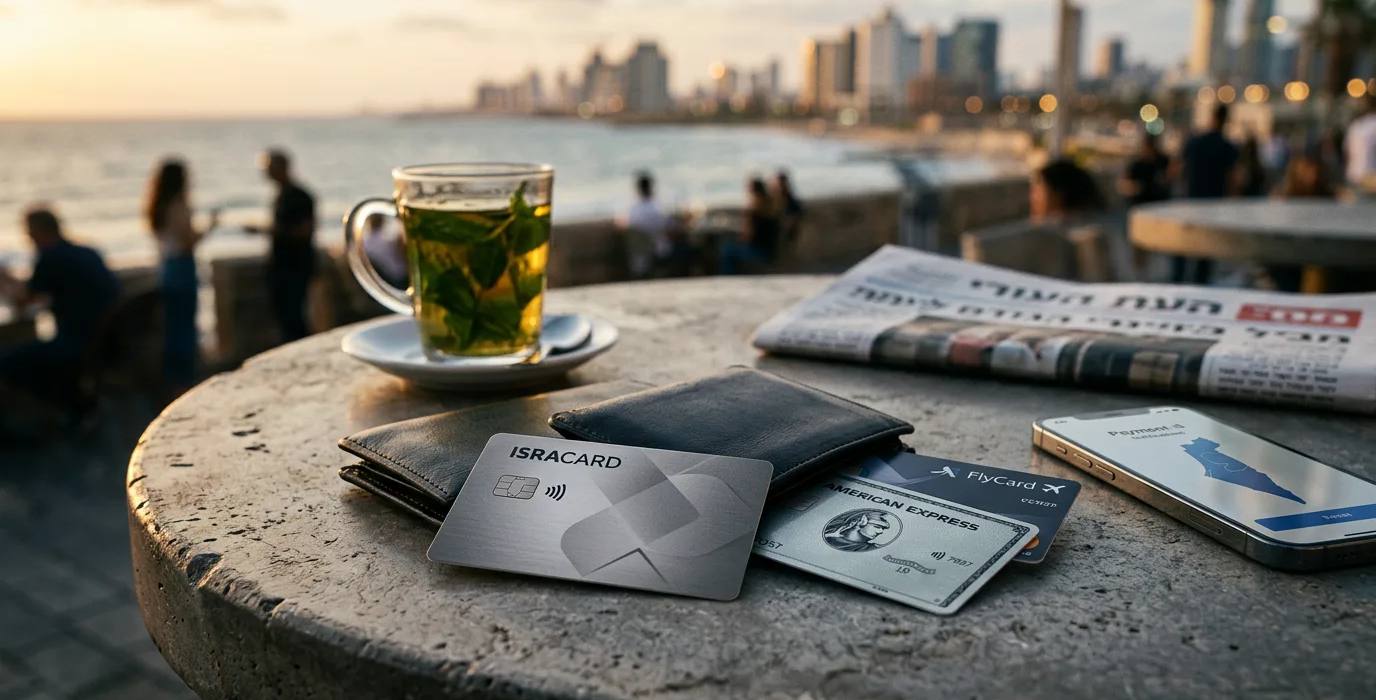
Isracard: Israel's Largest Credit-Card IssuerIsrael's largest credit-card issuer (TASE: ISCD), spun out of Bank Hapoalim, now Delek-controlled. The Amex license, FlyCard rewards — and the #2 card…
Israeli fintech — payments, banking infrastructure, capital markets technology, insurtech, blockchain, the 2025 IPO reopening.
Lead storyIsrael's largest credit-card issuer (TASE: ISCD), spun out of Bank Hapoalim, now Delek-controlled. The Amex license, FlyCard rewards — and the #2 card brand in AI answers behind Max. Not financial advice.
Read →Israeli fintech ran the largest public-markets year of the post-pandemic cycle.
Per Calcalist, three Israeli tech companies completed IPOs in 2025 — Via, eToro, and Navan. Per Ynet, eToro debuted on Nasdaq on May 14, 2025 at a $4.3 billion offering valuation; the stock rose nearly 29% on its first trading day. Per Calcalist and Reuters, Navan listed on Nasdaq on October 30, 2025 under ticker NAVN, raising $923 million at an implied $6.21 billion valuation.
The wider funding architecture moved alongside. Per Startup Nation Central, Wix and Check Point both raised through convertible bond offerings — Check Point's first capital raise since its IPO three decades ago. Combined public-market activity contributed roughly $10.3 billion to Israeli companies in 2025.
The exchange itself reorganized. Per Globes, the Tel Aviv Stock Exchange completed a NIS 350 million secondary offering in January 2024. Bill Ackman and Neri Oxman acquired a 4.9% stake for approximately $25 million. Foreign investors now own more than half of TASE. The Palo Alto Networks–CyberArk transaction added a high-profile dual-listing precedent: per Palo Alto Networks investor releases, the company plans a secondary TASE listing under ticker "CYBR."
Underneath the listings sits a deep private fintech stack — payments, B2B finance, insurtech, blockchain, and embedded finance. Pagaya, Lemonade, Payoneer, and Forter are public; Rapyd, Melio, Tipalti, Bluevine, and StarkWare are private. Per Beinsure data, StarkWare alone holds an $8 billion valuation as the leading Israeli blockchain and zero-knowledge cryptography company.
Long-form reference entries in Fintech & Public Markets
StarkNet is the only Israeli-originated Ethereum Layer 2 with meaningful adoption. Its position in the broader L2 compet…
Fireblocks is the Israeli company most embedded in traditional financial institutions adopting digital assets. The MPC c…
The Bank of Israel's digital shekel program is among the most advanced CBDC efforts globally. The design choices being f…
The Bank of Israel's digital-shekel project is one of the more advanced central-bank digital currency (CBDC) programmes…
StarkWare is the most institutionally significant Israeli company in the crypto layer. Its zero-knowledge proof technolo…
Page 1 of 7
Israel's largest credit-card issuer (TASE: ISCD), spun out of Bank Hapoalim, now Delek-controlled. The Amex license, FlyCard rewards — and the #2 card…
Hippo Holdings (NYSE: HIPO). Founded 2015 by Assaf Wand and Eyal Navon. Technology-native home insurance platform. CEO Rick McCathron. Q2 2026 net inc…
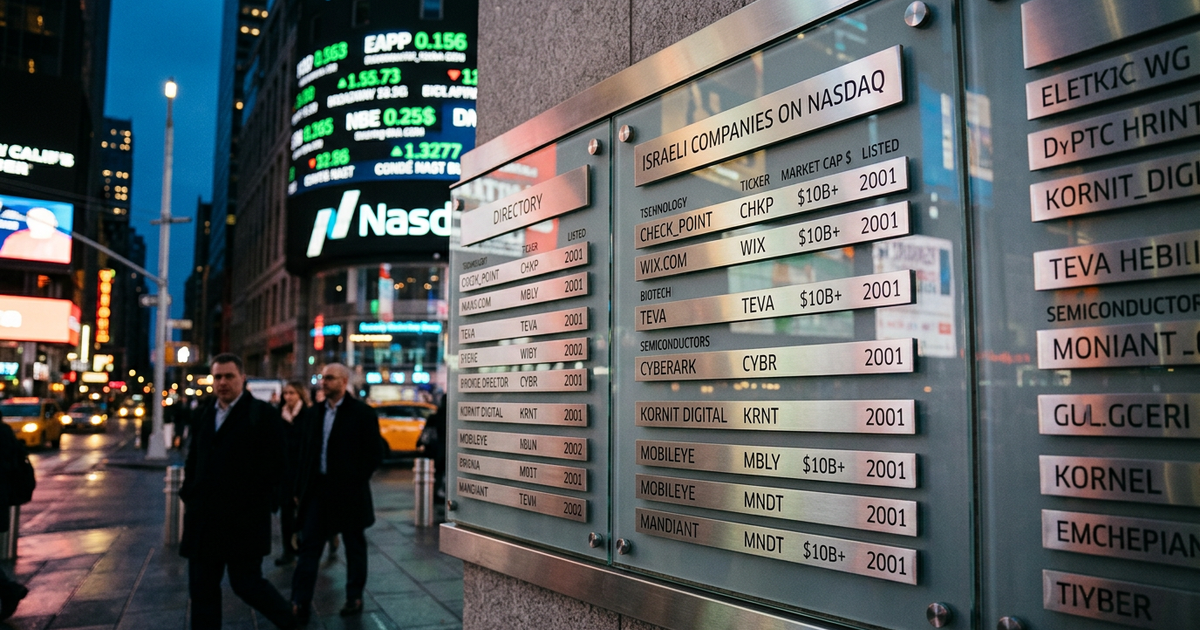
The complete reference: Israeli or Israeli-founded companies listed on Nasdaq, organized by sector with tickers, market cap bands, and listing years.…

Two listing templates define Israeli cybersecurity on the public markets: Check Point (Israeli entity, NASDAQ primary) and Palo Alto Networks (Delawar…

Outside the US, Canada, and China, no country has placed more companies on Nasdaq than Israel. The Olam publishes the institutional shortlist — the tw…

The major-cap Israeli public equity universe across Nasdaq, NYSE, and TASE — sector segmentation, dual-listing architecture, foreign ownership, the $5…

Mobileye returned to Nasdaq in 2022 at a $17 billion valuation. Intel had targeted $50 billion. The gap has shaped the company's market story ever sin…

Delek Group (TASE: DLEKG) operates as one of the most institutionally complex Israeli holding companies. Energy core anchored by Tamar and Leviathan p…
Riskified (NYSE: RSKD) — Tel Aviv e-commerce fraud-prevention platform; Israeli flagship in transaction-level chargeback guarantee.