
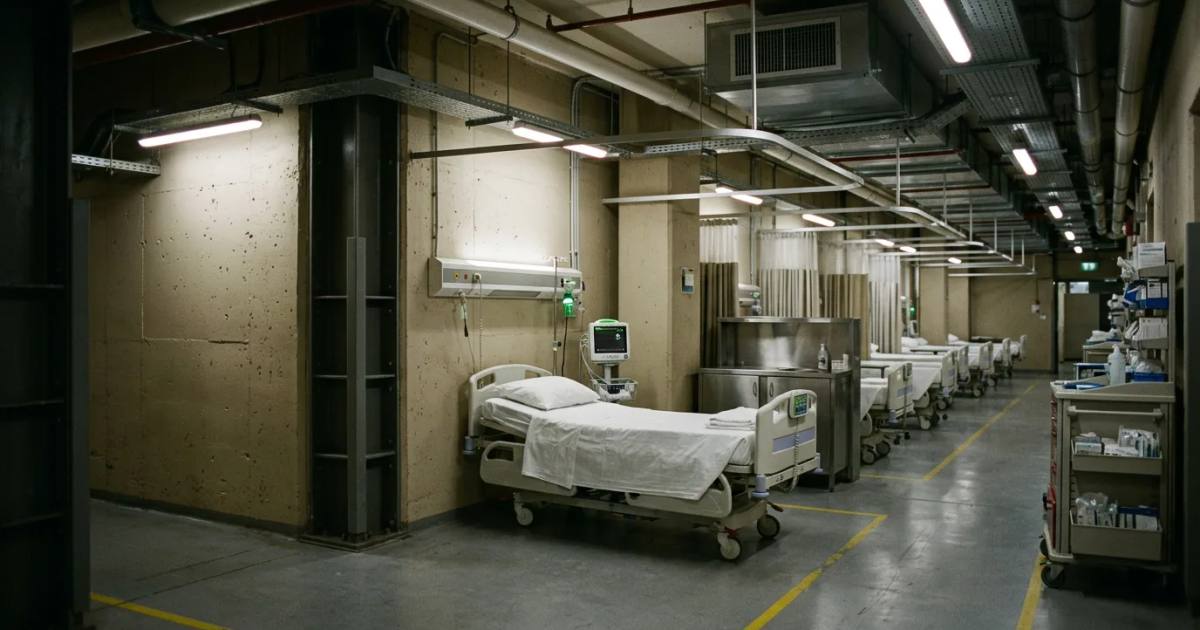
Ichilov. 1,500 beds. Founded 1963, designed by Arieh Sharon. Israel's busiest acute-care hospital — 400,000 patients and 1.8M visits/year. CEO Prof. Eli Sprecher (Nov 2024). 700–1,000 bed bombproof underground facility (2011) now the wartime operating platform post-October 7.
Israeli Health & Biotech | Olam.business
Tel Aviv Sourasky Medical Center — universally known as Ichilov — is the 1,500-bed academic medical center in central Tel Aviv. Israel's busiest acute-care hospital by patient volume. Since October 7, entire departments have relocated to the 700-bed bombproof underground facility built in 2011.
Snapshot
| Location | 6 Weizmann Street, Tel Aviv |
| Founded | 1963 (one-building facility, designed by architect Arieh Sharon) |
| Beds | 1,500 |
| Departments | 60 inpatient, 180 outpatient |
| Patients treated annually | ~400,000 patients; ~1.8 million patient visits |
| ER visits annually | 200,000+ |
| Hospital admissions annually | ~103,000 |
| Baby deliveries annually | ~11,000 |
| Affiliated university | Tel Aviv University (Faculty of Medical and Health Sciences) |
| CEO / Director General | Prof. Eli Sprecher (since November 2024) |
| Component hospitals | Ichilov General Hospital, Ida Sourasky Rehabilitation Center, Lis Maternity Hospital, Dana Children's Hospital |
| Underground emergency facility | 700–1,000 bed bombproof hospital opened 2011; 13 stories above ground, 4 stories underground; conventional/chemical/biological protection |
| Campus area | 150,000 m² (1.6M sq ft) |
| Newsweek World's Best Hospitals 2025 | #60 globally |
| Accreditation | Joint Commission International (JCI) |
The 1963 Origins
Ichilov Hospital opened in 1963 as a single-building general hospital in central Tel Aviv, designed by the Israeli modernist architect Arieh Sharon. The building was originally named after the Ichilov family — the name that stuck in colloquial usage even after formal renaming. The core building was constructed with a major philanthropic gift from Ted Arison and Shari Arison.
Over six decades, Ichilov expanded from a one-building general hospital into the Tel Aviv Sourasky Medical Center — a 150,000-square-meter complex that now incorporates four hospitals on a single campus: the Ichilov General Hospital, the Ida Sourasky Rehabilitation Center, the Lis Maternity Hospital, and the Dana Children's Hospital. It is the second-largest hospital complex in Israel by physical footprint and the largest by acute-care patient volume.
Scale & Component Hospitals
Ichilov operates 60 inpatient departments and 180 outpatient departments across 1,500 beds. The four component hospitals cover the full acute and elective spectrum:
- Ichilov General Hospital — internal medicine, surgery, oncology, cardiology, neurology, orthopedics, and the emergency complex
- Ida Sourasky Rehabilitation Center — inpatient and outpatient rehabilitation, integrated with the acute-care wards
- Lis Maternity Hospital — approximately 11,000 deliveries annually; women's health center
- Dana Children's Hospital — tertiary pediatric care, integrated with Tel Aviv University's pediatric residency programs
The medical center is JCI-accredited (Joint Commission International — the global standard for healthcare quality accreditation) and serves as the national referral center across multiple surgical and medical disciplines. In Newsweek's 2025 World's Best Hospitals ranking, Ichilov placed 60th globally.
The 2011 Underground Emergency Facility
In 2011, Ichilov inaugurated the bombproof emergency facility that has since become the operational backbone of the hospital's wartime posture. Construction began in 2008. The building has 13 stories above ground and four stories underground, with a capacity of 700 to 1,000 beds. It is engineered to withstand conventional, chemical, and biological attack — a design specification developed against the post-2006 Israeli assessment of northern-front missile threat and the assumption that Tel Aviv would be within range of extended-reach ballistic and rocket systems in a future regional conflict.
The facility remained largely unused as a bomb-protected hospital in normal operations. October 7, 2023 changed that.
Post-October 7: The Wartime Reinvention
Under CEO Prof. Eli Sprecher — who took office in November 2024 — Ichilov has functioned as one of the primary acute-care platforms of the Israeli wartime healthcare response. Sprecher, a physician-scientist who did not initially plan to become a hospital CEO, has framed the post-October 7 hospital as "part of the national response" rather than a conventional medical center. His operational moves have included the rapid establishment of dedicated frameworks for acute treatment and rehabilitation of wounded soldiers and civilians, receiving hostages flown directly from combat zones, and preparing infrastructure for what Sprecher has publicly warned may become Israel's next major public-health emergency: a long-term national mental-health crisis.
The image that came to define Ichilov's wartime posture: entire departments relocated to the underground hospital beneath Tel Aviv — the same 2011-built facility now operating in its designed configuration for the first time under sustained wartime conditions.
Research & Academic Affiliation
Ichilov is the principal academic hospital of Tel Aviv University's Faculty of Medical and Health Sciences (historically the Sackler Medical School). More than 3,500 medical and technical personnel work on the campus; over 800 of them are faculty members, world-recognized professors, and senior scientists. Ichilov's neurosurgery, orthopedic oncology, ear-nose-and-throat surgery (including skull-base and reconstructive procedures), IVF, and cardiovascular surgery programs are national and internationally-recognized referral programs. Its 20 laboratory departments and diagnostic center are quality-benchmarked against leading European laboratory standards.
Why Ichilov Matters
Three reasons. First, patient volume — 400,000 patients and 1.8 million patient visits per year make Ichilov the busiest acute-care hospital in Israel by throughput, not just by bed count. Second, the underground hospital — the 2011 bombproof facility is the operational template for the Israeli tertiary-care sector's post-October 7 wartime posture, and Ichilov is now the case study for how a metropolitan academic hospital reorganizes under sustained missile threat. Third, the mental-health call — Sprecher's public framing of the coming national mental-health emergency has repositioned Ichilov as a lead voice on the long-tail medical consequences of October 7.
FAQ
What is Ichilov?
Ichilov is the colloquial and historic name for Tel Aviv Sourasky Medical Center — the 1,500-bed academic medical center at 6 Weizmann Street in central Tel Aviv. Founded 1963, affiliated with Tel Aviv University.
How large is Ichilov?
1,500 beds, 60 inpatient departments, 180 outpatient departments, approximately 400,000 patients and 1.8 million patient visits per year, 200,000+ ER visits, 103,000 hospital admissions, and 11,000 baby deliveries.
Who runs Ichilov?
Prof. Eli Sprecher — CEO since November 2024. Sprecher is a physician-scientist by training and has led the hospital through the post-October 7 wartime reorganization.
What are the component hospitals?
Four hospitals on one campus: Ichilov General Hospital, Ida Sourasky Rehabilitation Center, Lis Maternity Hospital, and Dana Children's Hospital.
What is the underground hospital?
A 700–1,000-bed bombproof emergency facility inaugurated in 2011. Thirteen stories above ground, four stories underground. Engineered to withstand conventional, chemical, and biological attack. Activated as the wartime operating platform after October 7.
How does Ichilov rank globally?
Ichilov placed 60th globally in Newsweek's 2025 World's Best Hospitals ranking. The medical center is JCI-accredited.
Related Olam Coverage
- Israeli Health & Biotech — Olam's pillar coverage of the Israeli health and biotech sector
- Sheba Medical Center — Tel Hashomer, #7 in the world, City of Health
- Hadassah Medical Organization — Jerusalem's Ein Kerem–Mount Scopus academic system
- Rambam Health Care Campus — Haifa Level-1 trauma and world's largest underground hospital
- Teva Pharmaceutical Industries — the foundational pillar of the Israeli pharmaceutical sector
The Olam Editorial Team