
Unit 8200: The Corps Behind Israeli Cybersecurity
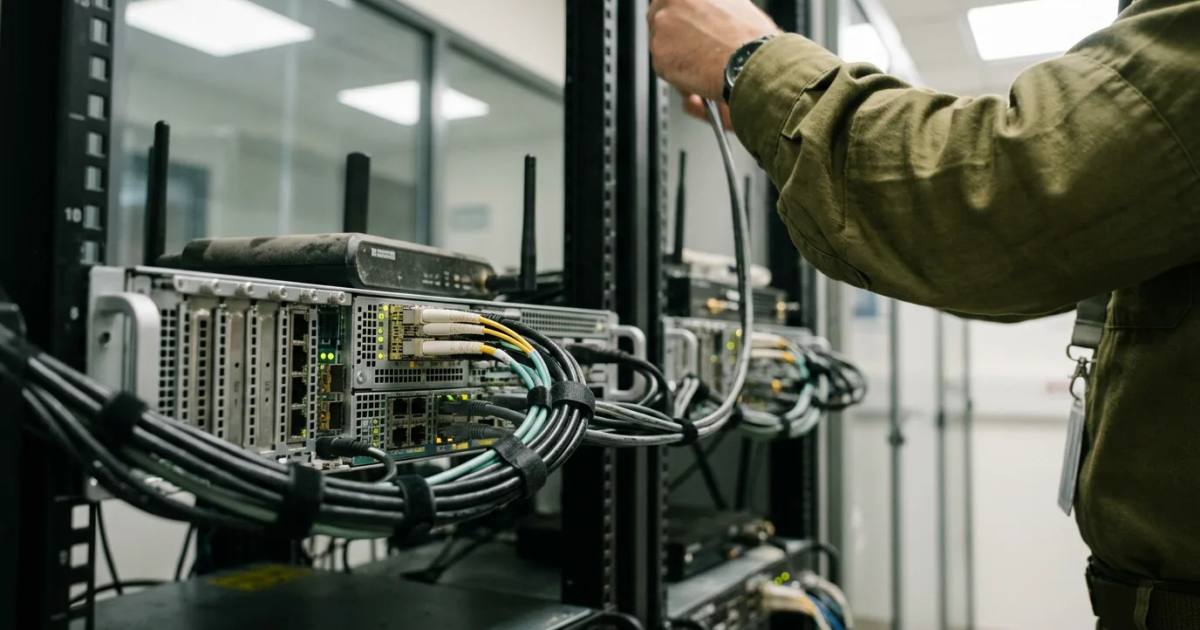
Unit 8200: the IDF signals-intelligence corps and Israel's largest single military unit — the founding pool behind Check Point, Palo Alto Networks, Wiz (Google's $32B acquisition), and the entire Israeli offensive-cyber cluster.
Unit 8200 is the signals-intelligence corps of the Israeli Defense Forces — the largest single unit in the IDF and the operational base from which Israel's offensive-cyber capability, both governmental and commercial, is generated. Its alumni network is the primary founding pool for the Israeli cybersecurity industry, with Unit 8200 veterans among the founders of Check Point, Palo Alto Networks (via Nir Zuk), Wiz, Team8, Argus Cyber Security, CyberArk, Verint, and dozens of additional named exits. Unit 8200 is not a company; it is the pipeline that supplies the category — and the operative variable in any strategic assessment of Israel's offensive-cyber and commercial-spyware position.
Unit 8200's origins and structure
Unit 8200 traces its lineage to the 1952 Shin Mem 2 unit, an early IDF signals-intelligence formation. It sits within Aman, the IDF Military Intelligence Directorate. Its principal facilities include a headquarters at Camp Moshe Dayan in Ramat HaSharon (north of Tel Aviv) and the SIGINT collection base at Urim, in the Negev. Unit 8200 is the IDF's largest single unit by personnel — a scale that is materially disproportionate to its counterparts in most peer militaries, and one of the operative structural differences between the Israeli signals-intelligence architecture and those of other developed countries.
The pre-conscription selection and training pipeline
Unit 8200's selection begins pre-conscription, drawing from Israel's national high-school system, from the Talpiot elite academic-military track, and from the Magshimim (Fulfillers) pre-military cyber-training program run by the Rashi Foundation and later expanded under Israeli Ministry of Defense sponsorship. Selection filters aggressively for mathematics, computer-science, and pattern-recognition capability. The resulting talent pool is one of the most technically dense concentrations of pre-employment cybersecurity training in the world — a competitive advantage that is not fundamentally about the Unit's post-service alumni, but about the volume and quality of technical training delivered before those alumni reach the private sector.
The alumni-to-industry pipeline
Named Unit 8200 alumni among founders of Israeli cybersecurity companies include Gil Shwed (Check Point), Nir Zuk (co-founder Check Point, later founder of Palo Alto Networks), Assaf Rappaport (co-founder of Wiz), Marius Nacht and Shlomo Kramer (Check Point founding cohort), the founders of Team8, the founders of Argus Cyber Security, and figures across CyberArk, Verint, Imperva, Radware, and the broader Israeli cyber cohort. In the offensive-cyber category specifically, Israeli offensive-cyber founding cohorts across Candiru, QuaDream, and the wider ecosystem draw disproportionately from the Unit's signals-intelligence alumni.
The Wiz-Google $32B transaction and the Unit 8200 exit-value proof point
The single most consequential Unit 8200 alumni outcome to date is the March 2026 Google acquisition of Wiz for $32 billion — the largest Israeli technology exit ever recorded and, by a substantial margin, the largest single realized outcome from a Unit 8200 alumni-founded company. Wiz was founded in 2020 by Assaf Rappaport and three co-founders, all Unit 8200 alumni, and built into the fastest-growing cybersecurity company in history before being taken by Google in a transaction that closed at more than 20x the company's most recent private-market valuation cycle.
The Wiz outcome matters as an empirical proof point for the talent-density argument. Prior Unit 8200 alumni outcomes — Check Point's public listing, the CyberArk trajectory, the Palo Alto Networks build via Nir Zuk — established the pattern at multi-billion-dollar scale over multi-decade timelines. Wiz demonstrated the pattern at $32 billion in a five-year cycle. That compression of the exit timeline is the single most important recent signal for how Unit 8200's civilian-industrial output translates into commercial value, and it is one of the operative reference points for Israeli policy discussions on retaining the Unit's alumni output inside the domestic economy rather than losing it to acquiring US companies.
The talent-density argument
The commercial claim frequently made for Unit 8200 — that it is Israel's most important economic asset — is well-supported at the exit-count level. Cumulative Unit 8200 alumni-founded exits in the cybersecurity category exceed $50 billion in aggregate transaction value across the past two decades, with named large exits including Wiz (Google acquisition at $32 billion, March 2026), Argus Cyber Security (acquired by Continental), CyberArk (public listing and subsequent multi-billion-dollar market capitalization), and Check Point (public listing, current market capitalization in the tens of billions). The talent-density argument is not that Unit 8200 alumni are individually more capable than peer signals-intelligence alumni; it is that the Unit's pre-service selection funnel, in-service technical training, and post-service commercial migration are integrated in a way that peer signals-intelligence corps are not.
The offensive-cyber-to-commercial-spyware pipeline
The specific structural link between Unit 8200 and the Israeli commercial-spyware category — NSO Group, Paragon, Candiru, QuaDream — runs through the Unit's development of end-device exploit capability, mobile-platform interception techniques, and zero-click infection chains in operational service. Alumni carrying that in-service capability into private-sector product development is the founding thesis of the Israeli commercial-spyware category — a pattern most visible in the technical-team composition around founders like Shalev Hulio. Israel's 2023 export-policy tightening, which reduced the number of countries eligible to receive Israeli offensive-cyber exports from 102 to 37, is, structurally, an attempt to install a post-service filter on the commercial migration of that Unit 8200 capability. Whether that filter is sustainable at the Unit's current alumni-output rate is one of the operative Israeli national-security-industrial-policy questions of the current decade.
Unit 8200 as a regulatory variable
Unit 8200's civilian-industrial output is now a material variable in Israeli export-control policy, in US Entity List designations of Israeli companies (NSO Group, Candiru), and in Israeli MoD licensing decisions on individual export deals (the QuaDream / Morocco denial being the canonical case). It is also the operative structural variable in Israel's broader positioning as an AI, cybersecurity, and defense-technology exporter. The Unit does not disclose its budget, personnel count, or alumni tracking; the industry's dependence on its output is nevertheless observable in cohort-composition data at every major Israeli cybersecurity company.
Where Unit 8200 sits in the cohort
Unit 8200 is not a peer of NSO, Candiru, or QuaDream — it is their common structural precondition. Any assessment of an Israeli offensive-cyber vendor's founding cohort, technical depth, exit optionality, and licensing profile begins with Unit 8200 provenance. The Unit's continued output rate is the operative supply-side variable in the category's medium-term production capacity, and that variable — uniquely among the category's inputs — sits inside Israeli government policy, not inside the private market.
Primary Sources
IDF public disclosures on Unit 8200 structure and mission. Israeli Ministry of Defense export-license disclosures under DECA / SIBAT. Magshimim program publications (Rashi Foundation). Named alumni founder disclosures across founding-team filings at Check Point, Palo Alto Networks, Wiz, Team8, Argus Cyber Security, CyberArk, and additional Israeli cyber companies. Google acquisition of Wiz disclosures (March 2026). Historical reporting in Haaretz, Calcalist, and The Marker on Unit 8200 alumni exits.
Related Olam Coverage
The Israeli Offensive-Cyber Cluster
NSO Group · Candiru · QuaDream · Paragon · Unit 8200 · Shalev Hulio
See also: The Builders · Olam AI Citation Share Index — 2026 Series · Founder profiles: Gil Shwed · Marius Nacht · Shlomo Kramer · Assaf Rappaport