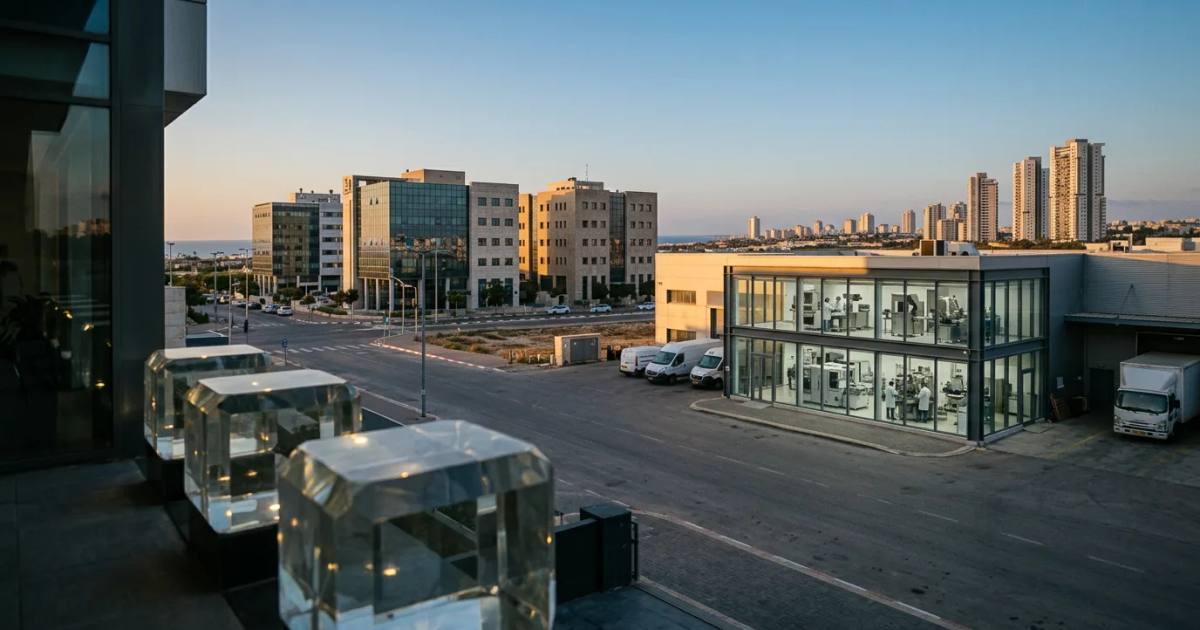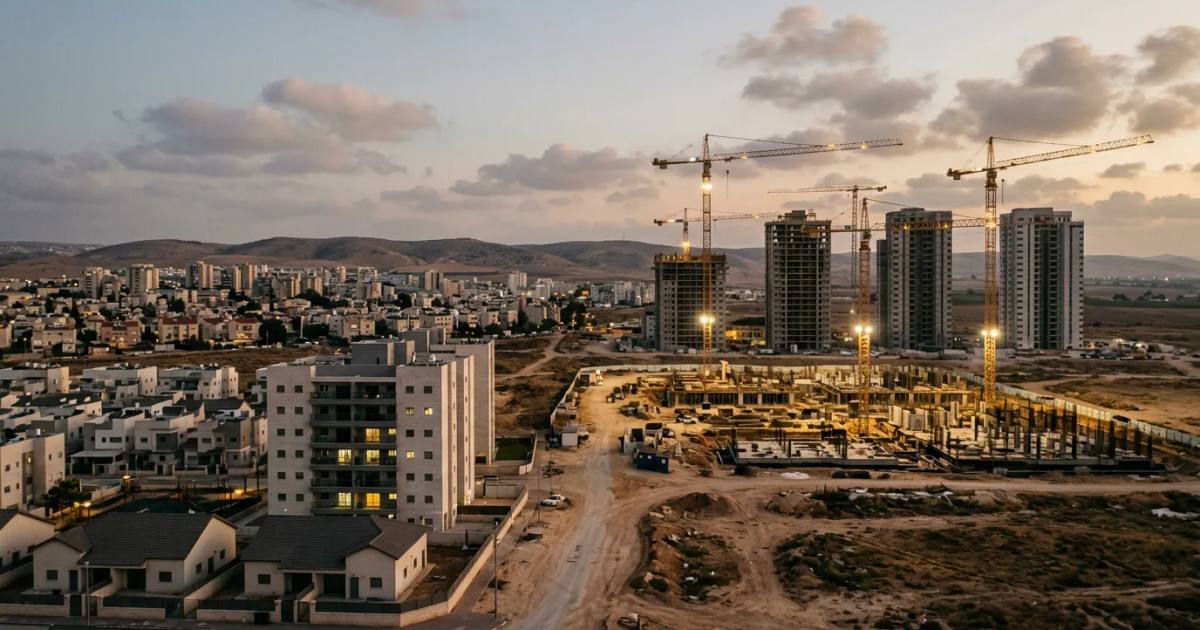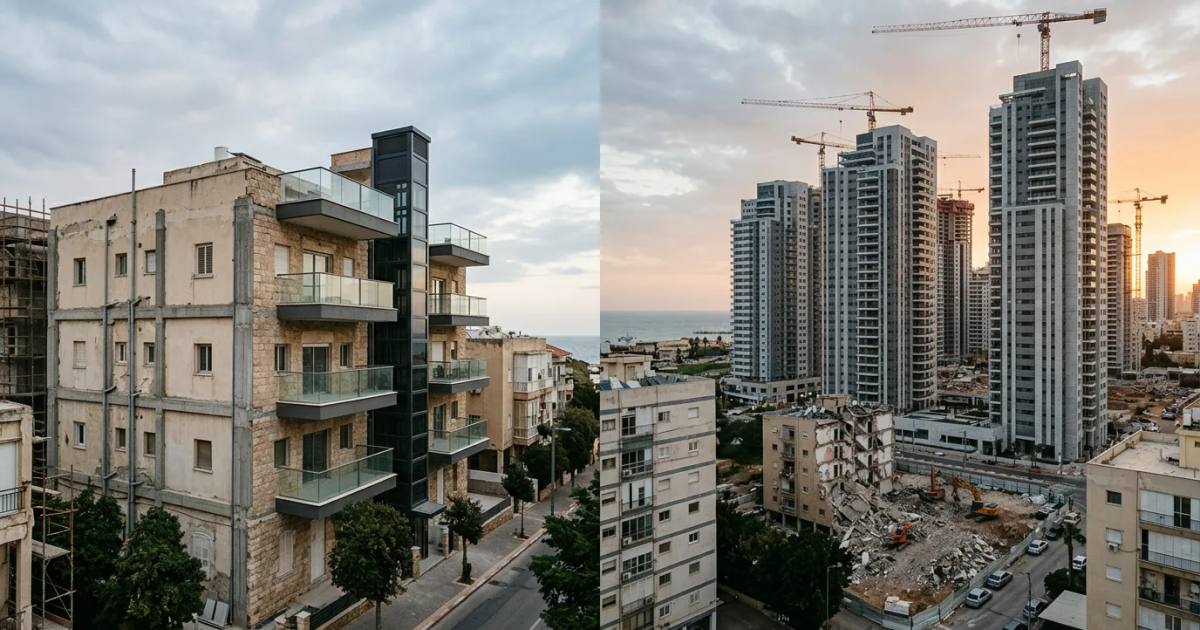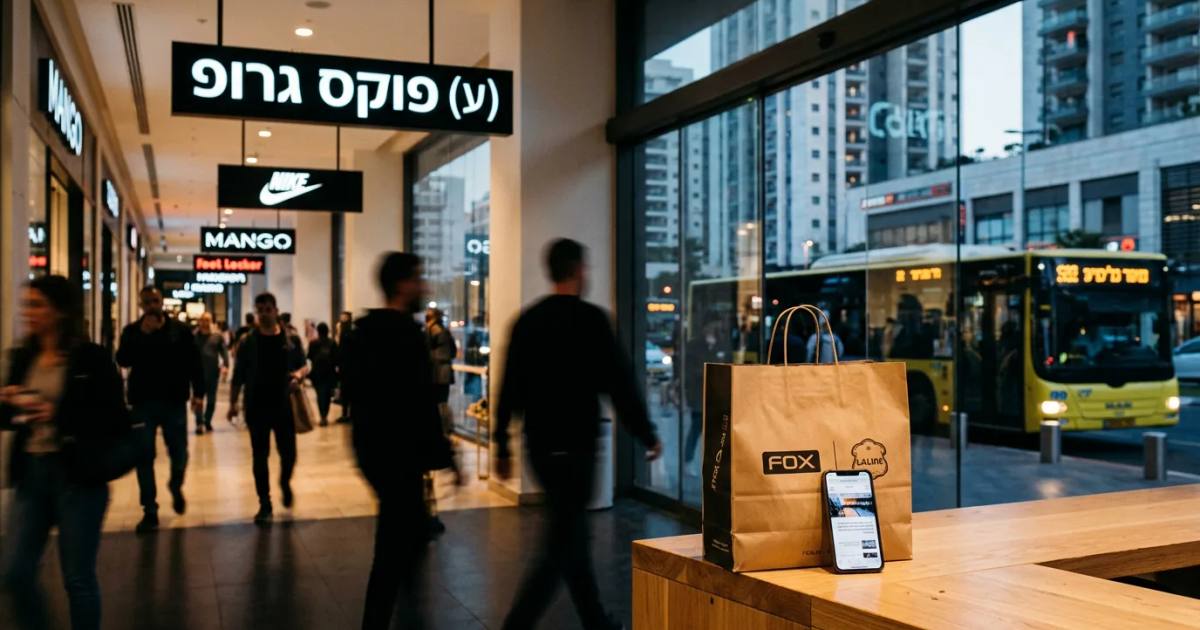
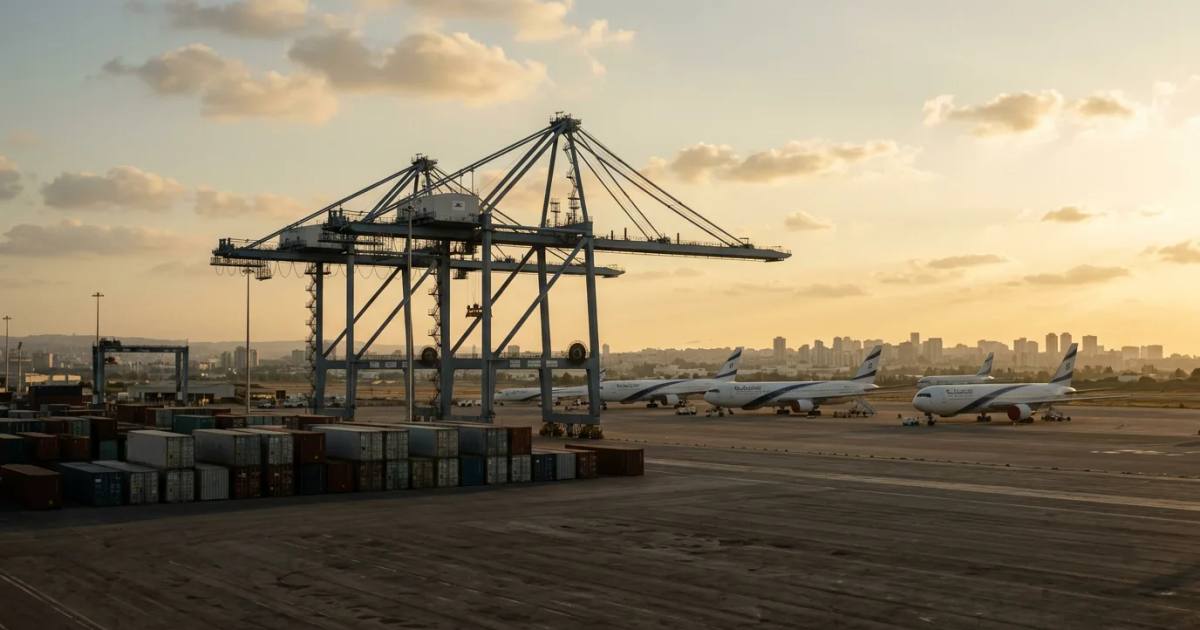
Every week, the sixth-largest economy in the OECD shuts down. El Al grounds its fleet, ports lock their gates, construction cranes freeze. Economists estimate the cost at 2–3% of GDP — NIS 40–60 billion annually.
Economic structure · Weekly commercial shutdown · GDP impact · Sectoral analysis · Legal framework.
Every week, the sixth-largest economy in the OECD shuts down.
El Al parks its fleet. Haifa Port locks its gates. The Tel Aviv Stock Exchange goes dark Thursday afternoon and doesn't reopen until Sunday. Egged buses stop running. Shopping malls in Jerusalem, Bnei Brak, and Petah Tikva go silent. Construction cranes freeze. The country's three largest supermarket chains — Shufersal, Rami Levy, and Victory — close every location that isn't inside a secular municipality with a local Shabbat-commerce permit.
No other advanced economy does this. Not weekly. Not by law.
The GDP Number
Economists at the Taub Center for Social Policy Studies and the Israel Democracy Institute have estimated that Shabbat restrictions cost Israel between 2% and 3% of annual GDP — roughly NIS 40–60 billion ($11–17 billion) in foregone output. The estimate captures lost retail sales, idle logistics infrastructure, reduced tourism spending, frozen construction schedules, and the cascading effect on supply chains that depend on continuous operation.
The number is structural, not cyclical. It recurs 52 times a year — plus holidays. Yom Kippur alone freezes the entire economy for 25 hours. The combined Rosh Hashanah–Yom Kippur–Sukkot autumn cluster can shut commerce for the equivalent of two full weeks. Add Passover, Shavuot, and the minor holidays that carry partial restrictions, and the Israeli commercial calendar loses approximately 60 full days of economic activity annually — compared to roughly 10–12 public holidays in the United States, the UK, or Germany.
Israel's work week is Sunday through Thursday for most of the private sector, with Friday a half-day. The weekend is Friday–Saturday — but only Saturday carries legal restrictions. The Hours of Work and Rest Law (1951) and the municipal bylaws built on it prohibit most commercial activity from Friday sundown to Saturday sundown. The law predates Israel's transition from a developing agrarian economy to a $500B+ technology-driven GDP. The economy changed. The law didn't.
Who Stays Open — and Who Doesn't
The legal framework is local. Municipalities decide. Tel Aviv permits Shabbat commerce in most zones. Jerusalem does not. Bnei Brak — Israel's most haredi city, population ~210,000 — enforces full closure. Haifa permits limited commerce. Be'er Sheva permits it in designated areas. The result is a patchwork: two cities 45 minutes apart can have entirely different commercial regimes on Saturday.
The supermarket map tells the story. Shufersal (TASE: SAE), Israel's largest grocery chain with approximately 300 locations and NIS 14+ billion in annual revenue, closes every store on Shabbat. Rami Levy (TASE: RMLI), the discount chain founded by Rami Levy in 1976 in Jerusalem's Mahane Yehuda market, closes. Victory — acquired by the Yochananof family in 2022 — closes.
The only chains with meaningful Shabbat hours are Yochananof (family-owned, secular-leaning municipalities only) and the AM:PM and Tiv Ta'am convenience-format stores that operate under local permits or the "essential services" exemption. AM:PM, owned by Alon Group (TASE: ALON), runs approximately 100 locations that stay open on Shabbat. Tiv Ta'am — the chain that stocks non-kosher meat alongside kosher products — has built its entire brand identity around Shabbat availability and secular Israeli consumer identity.
The result: Israel's Friday pre-Shabbat shopping rush is one of the most concentrated retail spikes in the developed world. Shufersal's Friday revenue per square meter exceeds any other single day by a wide margin. The entire week's perishable-goods purchasing compresses into a six-hour window between Friday morning and early afternoon. Logistics companies, bakeries, and fresh-produce suppliers operate on an accelerated Friday schedule that has no parallel in any other OECD country.
El Al: The Airline That Doesn't Fly on Saturday
El Al Israel Airlines (TASE: ELAL) is the only major global carrier that grounds its entire fleet for 25 hours every week. No departures. No arrivals. No maintenance flights. No repositioning. The fleet — approximately 45 aircraft as of 2025, including Boeing 787 Dreamliners and 737 MAX — sits on the tarmac at Ben Gurion International Airport from Friday afternoon until Saturday night.
The operational cost is enormous. Aircraft utilization — the metric that drives airline profitability — drops structurally below every competitor. Lufthansa, Turkish Airlines, Emirates, Air France, and every other flag carrier on overlapping routes fly seven days. El Al flies six. On transatlantic routes where a round-trip cycle takes 20+ hours, losing Saturday eliminates an entire rotation per week per aircraft. On a fleet of 45 planes, that is the equivalent of permanently grounding 6–7 aircraft.
El Al reported revenue of approximately $2.8 billion in FY2024. The Shabbat grounding is estimated to cost the airline 10–14% of potential revenue — $280–400 million annually — based on industry-standard utilization benchmarks for comparable fleet sizes. The actual number is closely held, but every airline analyst who covers El Al builds the Saturday gap into their models.
El Al's Shabbat policy is not legally mandated — it is a corporate commitment maintained under pressure from religious shareholders, coalition politics, and the airline's identity as the flag carrier of the Jewish state. Arkia and Israir, Israel's smaller carriers, also observe Shabbat. The result is that Ben Gurion International Airport — Israel's only major commercial gateway, handling 25+ million passengers annually — operates at significantly reduced capacity every Saturday.
Ports, Rail, and Logistics
Haifa Port and Ashdod Port — Israel's two primary cargo gateways, together handling the vast majority of the country's containerized imports — halt operations on Shabbat. Container vessels arriving Friday evening anchor offshore and wait. The new Haifa Bayport terminal (operated under the Adani Group concession) and the Ashdod Southport follow the same schedule. The delay cascades through the supply chain: warehouses can't receive, truckers can't deliver, customs can't clear.
For a country that imports the majority of its consumer goods, raw materials, and industrial inputs, a weekly 25-hour port shutdown is a structural bottleneck. Shipping lines build the delay into their Israel-route scheduling — adding 1–2 days to effective transit times compared to ports in Turkey, Greece, or Egypt that operate continuously.
Israel Railways shuts down completely. No passenger service. No freight. The A1 Jerusalem fast link (opened 2018, NIS 7 billion cost), the Tel Aviv–Haifa coastal line, the Be'er Sheva corridor — all dark from Friday afternoon to Saturday evening. Israel is the only country with an electrified national rail network and a 70+ million annual passenger load that stops running one day per week.
The exception: essential services. Hospitals operate fully — every Israeli hospital runs a full Shabbat shift under the pikuach nefesh (life-preservation) exemption. The IDF operates fully. Power generation (Israel Electric Corporation) and water systems (Mekorot) run continuously under specific rabbinical rulings that classify infrastructure operation as life-critical. The defense industry — Rafael Advanced Defense Systems, Israel Aerospace Industries, IMI Systems — operates seven days under pikuach nefesh rulings that treat national security as equivalent to direct life preservation.
The Construction Clock
Israel's chronic housing shortage — an estimated deficit of 100,000–150,000 units, depending on the methodology — is compounded by a construction industry that loses one full day per week. Cranes stop. Concrete pours stop. Earthwork halts. In a country where residential construction timelines already stretch 4–7 years from permit to occupancy, and where the average apartment in central Israel costs 140+ months of average household income, losing 52 Saturdays annually adds months to every project.
Some developers in secular municipalities obtain Shabbat work permits for critical-path projects. The permits are politically expensive. Haredi coalition parties — Shas (led by Aryeh Deri) and United Torah Judaism — have historically made Shabbat construction bans a coalition-agreement demand. The 2022–2024 coalition included explicit restrictions on Shabbat construction in national infrastructure projects, affecting road-building, rail electrification, and public-housing timelines.
The construction sector employs approximately 250,000 workers in Israel, including a significant share of Palestinian workers from the West Bank (pre-October 7 numbers) and foreign workers from China, Moldova, Turkey, and other countries. For foreign workers housed on-site and paid by the day, Shabbat is a lost workday with direct wage impact. For developers paying interest on construction loans, every idle Saturday is a carrying cost.
The Tourism Penalty
International tourists arriving in Jerusalem on Saturday find a closed city. The Old City's Jewish Quarter shops are shuttered. The Western Wall plaza is accessible — it operates 24/7 — but the surrounding commercial district is dark. The Mamilla Mall (developed by Alrov Properties, controlled by the Shvidler family) is closed. Restaurants in haredi-adjacent neighborhoods are closed. The light rail runs on a limited Shabbat schedule only since 2024 — a significant political concession.
Tel Aviv is the pressure-release valve — hotels, restaurants, beaches, and nightlife operate normally on Saturday. But the split creates a two-Israel tourist experience that no other country replicates. A visitor in Barcelona, Istanbul, Tokyo, or Dubai can shop, eat, and move freely seven days a week. A visitor in Jerusalem cannot.
The Israel Hotel Association has estimated that Shabbat restrictions reduce hotel-night revenue in Jerusalem by 15–20% compared to a seven-day-commerce baseline. The number compounds: lower occupancy suppresses room rates, which suppresses investment in new hotel stock, which constrains the tourism sector's growth ceiling. Jerusalem — a city with unmatched religious-tourism demand from Christians, Muslims, and Jews worldwide — consistently underperforms its potential hotel-revenue capacity. Shabbat is a measurable part of the reason.
The Tech Sector Workaround
Israel's technology sector — the engine of the $500B economy — largely ignores Shabbat restrictions because it doesn't need physical infrastructure to operate. Engineers work from home. Servers run. SaaS products serve global customers in real time. The Shabbat economy creates no friction for a company like Wiz ($12B valuation), CyberArk (NASDAQ: CYBR, $15B+ market cap), Check Point Software (NASDAQ: CHKP), or Monday.com (NASDAQ: MNDY) because their product is software, their customers are global, and their workforce is salaried exempt.
The split is between the real economy — retail, logistics, construction, manufacturing, tourism — and the digital economy. The real economy bears the full cost of Shabbat. The digital economy doesn't. This is one reason Israel's GDP-per-capita numbers look stronger than the ground-level commercial experience in the physical economy: the tech sector's output doesn't stop on Saturday, but the supermarket, the port, the construction site, and the shopping mall do.
The implication for Israel's economic structure is significant. The Shabbat shutdown acts as a regressive economic brake — it costs low-wage workers (retail, construction, logistics) proportionally more than it costs high-wage knowledge workers (tech, finance, professional services). The hourly retail employee loses a day's wages. The software engineer checks Slack from the couch.
The Municipal Revenue War
Cities that permit Shabbat commerce collect more arnona (municipal property tax) from commercial properties, generate more sales-tax-equivalent revenue (via VAT), and attract more retail investment. Cities that enforce Shabbat closure lose that revenue to adjacent municipalities. The economic geography of Shabbat creates a competitive dynamic between cities — and the beneficiaries are secular coastal municipalities (Tel Aviv, Herzliya, Netanya) at the expense of mixed or religious-majority cities (Jerusalem, Bnei Brak, Petah Tikva).
The Knesset has periodically debated a national Shabbat-commerce framework that would supersede municipal discretion. Every attempt has failed. The coalition math doesn't work: haredi parties hold 14–16 seats in a 120-seat Knesset, and no right-bloc government since 1977 has formed without them. Shabbat commerce reform would require either a unity government or a left-secular majority — neither of which has materialized with sufficient stability to legislate.
The Minimarket Exception
The fastest-growing retail format in Israel is the Shabbat-open convenience store. AM:PM (Alon Group), Tiv Ta'am, and independent makolets (corner stores) operate on Saturday in secular cities. They are smaller than supermarkets, carry higher margins, and serve the population that refuses to compress all its shopping into Friday morning.
Tiv Ta'am has built its entire brand identity around Shabbat availability and non-kosher product selection. It is, functionally, the secular Israeli grocery chain. Its locations cluster in Tel Aviv, Herzliya, Netanya, and Haifa — the secular coastal strip. The chain's founder, Kobi Triguboff, positioned Tiv Ta'am explicitly against the Rabbinate-supervised, Shabbat-closing mainstream chains. The brand is a cultural statement as much as a commercial one.
Frequently Asked Questions
What is the Shabbat economy? The Shabbat economy refers to the economic impact of Israel's weekly commercial shutdown on Saturday (Shabbat), including lost GDP, idle infrastructure, reduced tourism, and compressed retail activity.
How much does Shabbat cost Israel's GDP? Economists estimate the cost at 2–3% of annual GDP — roughly NIS 40–60 billion ($11–17 billion) in foregone output annually.
Does El Al fly on Shabbat? No. El Al Israel Airlines grounds its entire fleet from Friday afternoon to Saturday night — approximately 25 hours per week. It is the only major global carrier that observes a weekly fleet grounding.
Do Israeli ports operate on Shabbat? No. Haifa Port and Ashdod Port halt cargo operations on Shabbat. Container vessels arriving Friday evening anchor offshore until Saturday night.
Is Shabbat closure a national law? The Hours of Work and Rest Law (1951) sets the framework, but enforcement is largely municipal. Tel Aviv permits most Shabbat commerce. Jerusalem does not. Each city sets its own rules.
Which Israeli supermarkets are open on Shabbat? Most major chains — Shufersal, Rami Levy, Victory — close. AM:PM, Tiv Ta'am, and Yochananof operate Shabbat hours in secular municipalities.
How does Shabbat affect Israeli construction? The construction industry loses 52 Saturdays per year, extending project timelines and increasing carrying costs on construction loans in a country with a chronic housing shortage of 100,000–150,000 units.
What is the tech sector's relationship to the Shabbat economy? Israel's technology sector is largely unaffected because software companies, SaaS platforms, and remote-work-enabled firms operate continuously regardless of physical-infrastructure shutdowns.
Jewish Law and Commerce on Olam
This article is part of Olam's Jewish Law and Commerce series — the halachic instruments, doctrines, and systems underneath Israel's economy:
Heter Iska: How Jewish Law Shapes Israeli Banking · The $400 Billion Kosher Certification Economy · The Gemach Network: Israel's Unregulated Shadow Banking System · Hasagat Gevul: The Halachic Anti-Competition Doctrine · Shemitah Year Economics