Amos Luzon Development and Energy — TASE-listed, founder-controlled — runs a mid-premium Netanya residential portfolio with a renewable-energy sidecar. Competitors: Ashdar, Electra, Rotshtein, Zemach Hammerman, Gindi, Y.H. Dimri. Multi-cycle presence beats first-cycle scale.
Amos Luzon Development and Energy Group Ltd., the TASE-listed group founded and controlled by Amos Luzon, has built one of the more distinctive coastal residential portfolios in Netanya. The group operates across two interlocking business lines — residential development and renewable-energy infrastructure — and the Netanya residential pipeline is one of its core real-estate positions. Luzon's Netanya activity spans multiple projects across Ir Yamim adjacencies, central Netanya urban renewal, and the northern coastal strip, giving the group meaningful footprint in the city's mid-premium residential market. The developer is not the largest single operator in Netanya. But it is one of the most persistent, and its multi-cycle presence in the city has compounded into a portfolio that most of the newer entrants cannot match.
Amos Luzon: the founder-operator
Amos Luzon founded the group that carries his name and continues to control the business through his personal holding structure. Luzon's operating background is in Israeli residential construction — the founder-operator profile common to a generation of Israeli developers who built their first businesses in the 1990s and 2000s and grew them into public companies through the following two decades. The Luzon group listed on the Tel Aviv Stock Exchange and today operates as a diversified developer with residential-real-estate and renewable-energy segments running in parallel.
Founder-controlled structure matters for developer commitment. Luzon has decision authority that a professionally managed developer does not always have. Project selection, deal-timing, and long-cycle commitments can be made without the governance friction that broader-shareholder groups sometimes face, which lets the group commit to Netanya positions across cycles when timing supports it and hold through periods when it does not.
Where Luzon builds in Netanya
Luzon's Netanya activity concentrates in the mid-premium bracket — priced below Africa Israel Residences' anchor-tower pricing but above the pure mid-market layer that developers like Ashdar and Y.H. Dimri work in volume. That positioning targets the specific buyer segment that wants Ir Yamim access and coastal orientation without the top-tier district-anchor markup. It is a defensible commercial position, but it requires precise project selection and pricing to hold consistently.
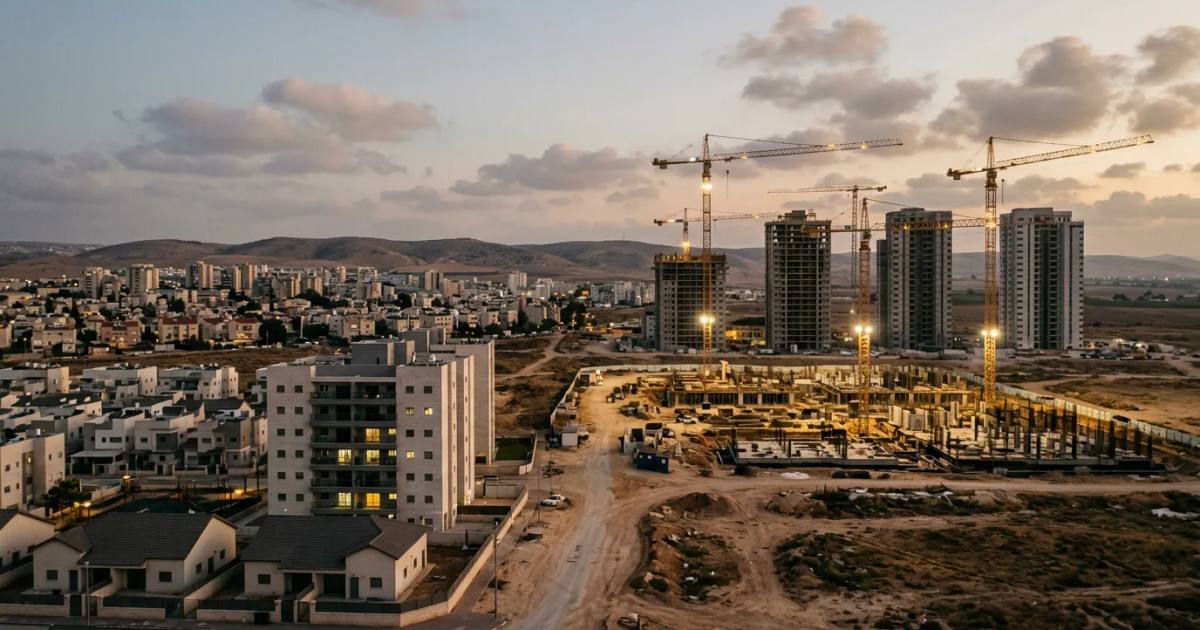
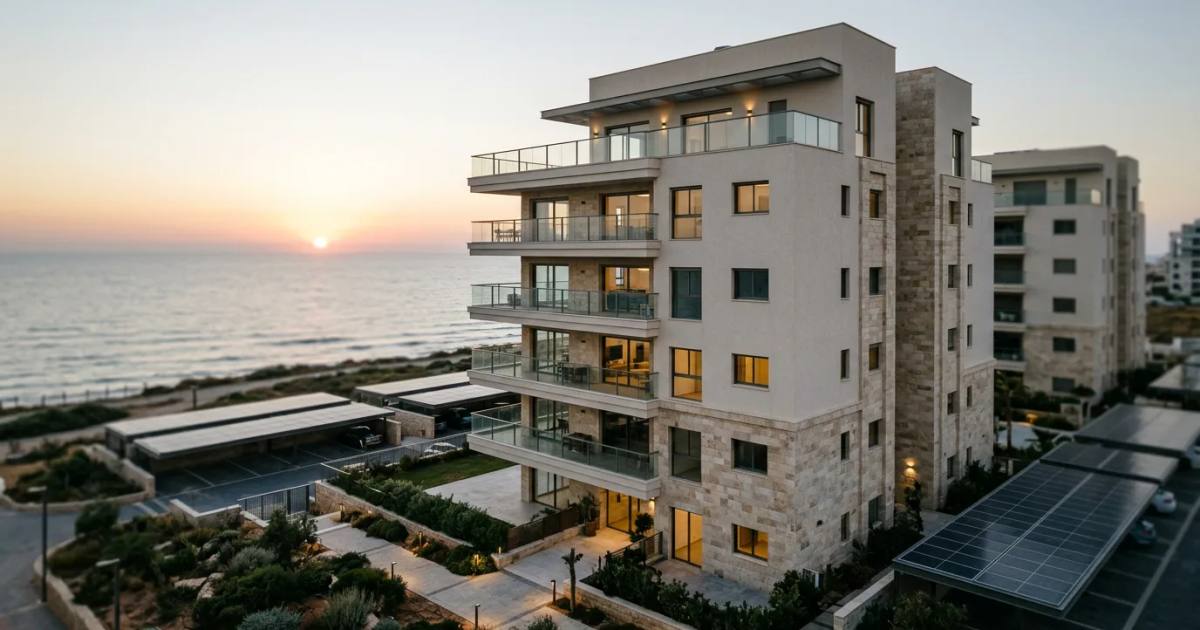
The group's Netanya project pipeline extends across Ir Yamim boundary sites, central Netanya urban-renewal parcels, and coastal-adjacent projects. Each project follows a similar formula: mid-to-high-rise residential towers, structured parking, resident-amenity layer calibrated to the price point, and marketing to a mixed buyer base that includes Israeli upgraders, French diaspora buyers, and Tel Aviv-commuter demand. The buyer mix is broader than a pure premium developer's book, which reduces exposure to any single buyer cohort's cycle.
Two segments, one balance sheet
Luzon Development and Energy's dual-segment structure — residential real estate plus renewable energy — is a defining characteristic of the group. The renewable-energy segment operates solar installations and related infrastructure across Israeli and international markets, generating recurring cash flow that complements the project-cycle economics of residential development. Where a residential-only developer depends on presales and short-cycle financing to fund construction, Luzon draws on renewable-energy cash flow to smooth development-cycle timing.
Two-segment developer structures are not unique to Luzon in the Israeli listed-developer landscape — Ashtrom's construction-plus-real-estate structure works on similar logic, and Ofer Yanai's Nofar Energy / Hapoel Tel Aviv holding structure runs a comparable dual-segment allocation model. But Luzon's specific combination of residential development with renewable energy is one of the cleaner examples of the two-segment model applied at mid-cap scale in the Israeli listed market.
Competitive position in Netanya
Luzon competes in Netanya against the same mid-cap developer cohort that competes across Israeli coastal cities: Ashdar, Electra Real Estate, Rotshtein Real Estate, Zemach Hammerman, Gindi Holdings, and Y.H. Dimri, plus a longer tail of smaller local builders and joint-venture structures in which premium developers like Aura Investments partner with mid-market execution specialists. The competition runs on project-specific execution — signature-assembly speed on urban-renewal sites, buyer-outreach effectiveness for new-construction presales, delivery reliability, and post-handover buyer service.
Luzon's competitive edge sits in three areas. First, founder-operator commitment: multi-cycle presence in Netanya that predates most current entrants. Second, dual-segment balance sheet: renewable-energy cash flow that smooths residential-development timing. Third, product calibration: consistent mid-premium positioning that avoids both the volatility of the premium bracket and the margin compression of the mid-market layer.
The delivery record
Luzon's delivered-unit record in Netanya has grown steadily across the group's history in the city. Individual project delivery timelines run typical Israeli residential cycles of three to five years from ground-breaking to handover. Multiple projects in different stages produce a delivery pipeline that generates units in Netanya each year, which builds the credibility that supports subsequent presale campaigns.
Delivery reliability is one of the underrated developer moats in Israeli residential real estate. Buyers who watched a previous Luzon project deliver on schedule are more willing to commit to a new Luzon presale than they would be to an unfamiliar developer's presale at the same price. That reputational compounding is what turns a mid-cap developer into a persistent market participant rather than a project-by-project competitor.
The renewable-energy sidecar
Israeli renewable energy has been one of the more consistent Israeli industrial-growth stories of the past decade, with solar generation capacity expanding through Israel Electric Corporation and Public Utilities Authority (PUA) programs, subsidized rooftop and utility-scale deployment, and international expansion into Southern Europe, the United States, and Central Asia. Luzon's renewable-energy segment participates in that flow. The segment is not the group's largest business, but it is the segment that gives the real-estate arm its cash-flow smoothing.
Renewable-energy dividend flow into a residential-developer parent company is an underrated structural advantage for Israeli mid-cap developers. It solves the single hardest problem in Israeli residential development — the multi-year gap between land acquisition and unit-handover cash — without diluting the developer's residential specialization.
Where Luzon sits in the developer hierarchy
Luzon sits inside the mid-cap Israeli residential-developer tier — smaller than the top-tier anchors (Africa Israel Residences), roughly comparable in scale to the second-tier volume operators (Ashdar, Electra Real Estate, Y.H. Dimri), and above the local-only mid-tier operators. The mid-cap position is defensible because it captures enough scale to run infrastructure — legal, marketing, construction coordination — while retaining enough founder-operator flexibility to move quickly on specific projects.
Groups at Luzon's scale that combine real estate with an adjacent cash-flow business are among the more resilient developers in the Israeli listed market. The Netanya position is the residential expression of that resilience.
Why it matters
Amos Luzon Development and Energy is one of the persistent mid-premium coastal-residential developers in Israel, and Netanya is one of its most significant markets. The group is not the largest developer in the city, but it is one of the more durable — and durability is the underrated variable in Israeli residential developer performance. Multi-cycle presence beats first-cycle scale over time.
Netanya has anchors, volume operators, and persistent mid-caps. Luzon is one of the persistent mid-caps.
Primary Sources
- Amos Luzon Development and Energy Group Ltd. — TASE filings and annual reports
- Netanya Municipality — residential project registry and permit records
- Israel Land Authority — coastal-city land allocation records
- Public Utilities Authority (PUA) — renewable-energy generation licensing records
Olam coverage
Part of Olam's Netanya real-estate series. See Ir Yamim, Africa Israel in Netanya, and Ashdar Netanya for the anchor-and-volume-operator context.