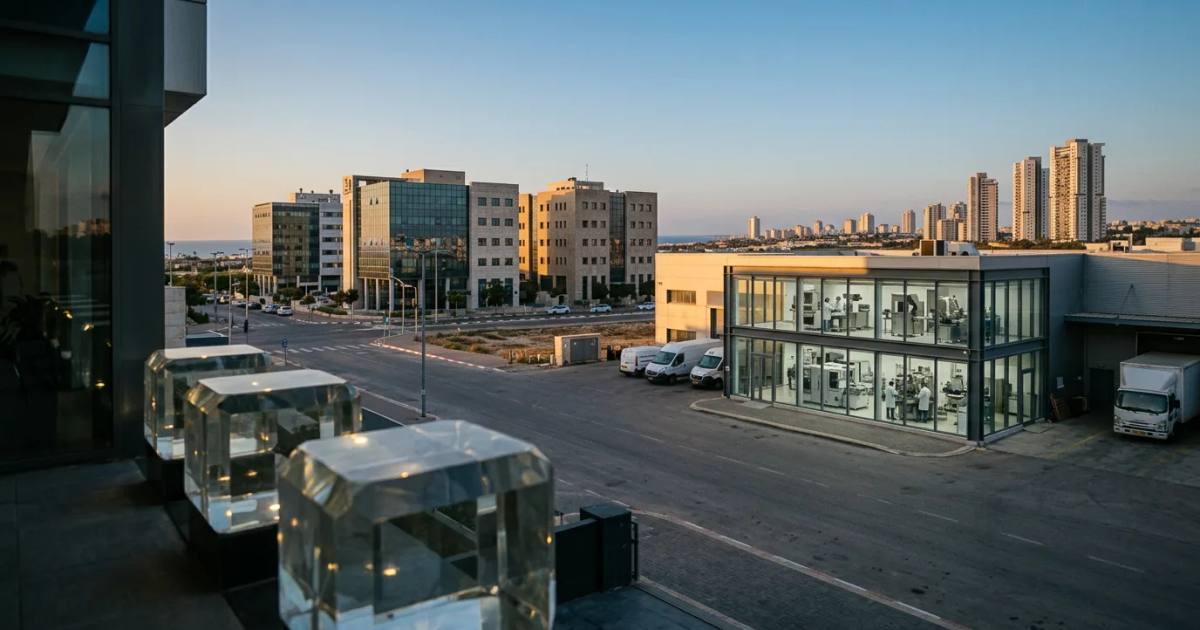
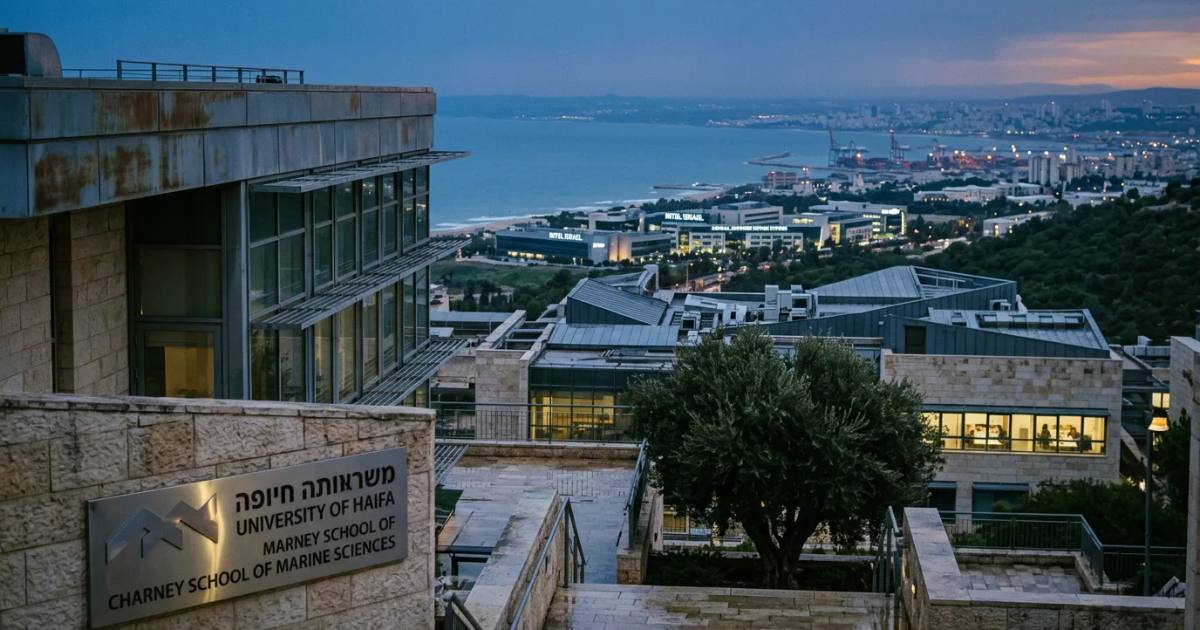
University of Haifa, founded 1963 on Mount Carmel, independent accreditation 1972. Israel's northern research anchor. Charney School of Marine Sciences, Department of Computer Science. Adjacent to Intel Haifa, IAI, Rafael. Not in current 5W AI Higher Ed Index Volume 02.
University of Haifa · Founded 1963 · Northern Israel's research anchor on Mount Carmel · The academic institutional expression of Israeli higher education in the Haifa-Northern industrial base.
The University of Haifa is Israel's northern research university, founded 1963 as a branch of Hebrew University of Jerusalem and granted independent university accreditation in 1972. Its main campus sits on the southern ridge of Mount Carmel above the city of Haifa — geographically at the northern end of the Israeli academic system and at the center of the Haifa-Northern industrial and technology base. The University's institutional character is comprehensive across the humanities, social sciences, natural sciences, marine sciences (via the substantial Charney School of Marine Sciences), computer sciences, and law. The University of Haifa and the Technion together form the two-institution academic base of northern Israel — the Technion anchoring engineering and frontier research, Haifa anchoring the humanities, social sciences, marine sciences, and the northern population's broader academic pipeline.
Institution Snapshot
| Founded | 1963 as a branch of Hebrew University of Jerusalem; independent university accreditation 1972 |
| Main campus | Mount Carmel, Haifa — southern ridge overlooking the city |
| Faculties | Humanities · Social Sciences · Law · Social Welfare and Health Sciences · Natural Sciences · Education · Neurosciences · Charney School of Marine Sciences |
| Institutional character | Comprehensive northern research university with particular research concentration in humanities, social sciences, marine sciences, and computer science |
| Enrollment | Approximately 18,000 students |
| Position in Israeli academic geography | Northern anchor — the only major research university located at the northern end of the Israeli academic system alongside the Technion |
| Demographic role | Israel's most diverse student body — largest share of Arab-Israeli, Druze, and northern minority students of any Israeli research university |
Why Haifa matters
The University of Haifa is Israel's northern anchor of the academic system alongside the Technion. The two universities together produce the Haifa-Northern academic base that supplies the industrial and technology operations concentrated in the Haifa metropolitan region — Intel's substantial Haifa operations, the northern portion of Israel's technology industry, and the Northern-district companies that have grown around the Haifa Port and the industrial belt.
The founding and the Northern-anchor thesis
The University of Haifa was founded in 1963 as a northern branch of Hebrew University of Jerusalem, established to serve the growing academic demand from the Haifa metropolitan region and the surrounding northern population centers. Its main campus was developed on the southern ridge of Mount Carmel — geographically overlooking the city of Haifa and the Haifa Bay industrial base — with substantial architectural presence. The University was granted independent research-university accreditation in 1972 and has operated as a fully independent Israeli research university across the subsequent five decades.
Its institutional character has been shaped by the geographic position: Israel's northern academic anchor, in a region where the majority of the country's mixed Jewish-Arab population lives, adjacent to substantial Arab-Israeli communities and the northern minority populations, and physically overlooking one of the operating industrial bases of the Israeli economy.
Israel's Most Diverse Research University — 40%+ Non-Jewish Enrollment
The University of Haifa enrolls the largest share of Arab-Israeli, Druze, and other minority students of any Israeli research university — over 40% of its student body comes from non-Jewish communities. This is not incidental: the northern geography places the University adjacent to the largest Arab-Israeli population centers (Nazareth, the Triangle region, the Druze communities of the Carmel and Galilee), and its humanities and social-sciences faculties have produced a substantial share of the Arab-Israeli professional and academic class across successive decades.
The Charney School of Marine Sciences — Eastern Mediterranean Research Anchor
The University of Haifa's research concentrations run across the humanities and social sciences (a substantially larger share of institutional research than at the more technology-oriented Israeli research universities), the natural sciences, and the specific concentrations in marine sciences via the Leon H. Charney School of Marine Sciences. The Charney School is one of the leading marine-science research operations in the Eastern Mediterranean — its research spans oceanography, marine biology, marine geosciences, and the applied categories that have become strategically significant as Israel has expanded its eastern-Mediterranean economic zone. The discovery and development of Israel's offshore natural gas fields (Leviathan, Tamar) have elevated the strategic significance of the Charney School's research output in marine geosciences and environmental science.
Computer Science and the AI-Adjacent Research Intersection
The Department of Computer Science operates alongside the neurosciences programs in the research categories at the intersection of computational research and applied AI. While the University of Haifa's AI research profile is smaller in scale than the Technion's or Tel Aviv University's, its interdisciplinary intersections — particularly the computational-marine-science and computational-social-science categories — represent research niches where the University produces distinctive output.
The Haifa-Northern industrial adjacency
The University of Haifa's operating environment includes substantial adjacency to the Haifa-Northern industrial base. Intel's Haifa operations — one of the semiconductor company's largest engineering sites globally — anchor the technology industry in the region. Israeli Aerospace Industries, Rafael Advanced Defense Systems, and the Haifa Port together produce a substantial industrial and technology employment base. The University supplies engineering, science, and humanities graduates into this Haifa-Northern industrial ecosystem alongside the Technion — the two universities together anchoring the northern academic pipeline into the surrounding industry.
Watch points
- The University of Haifa's AI production capacity across the Department of Computer Science and the intersections with the neurosciences programs.
- The Charney School of Marine Sciences research output and its intersections with computational-marine-science and applied-AI categories — particularly as Israel's eastern-Mediterranean gas operations expand.
- Named senior faculty appointments and departures as the Israeli AI industry competes for the same academic talent pool.
- The trajectory of the Haifa-Northern technology industry base and the University's role as an academic supplier.
- The University's role in producing the northern Arab-Israeli professional class and its implications for the broader Israeli innovation ecosystem.
Frequently Asked Questions
When was the University of Haifa founded?
The University of Haifa was founded in 1963 as a northern branch of Hebrew University of Jerusalem. It was granted independent research-university accreditation in 1972.
Where is the University of Haifa located?
The University's main campus sits on the southern ridge of Mount Carmel, in Haifa, Israel — geographically overlooking the city and the Haifa Bay industrial base.
What is the Charney School of Marine Sciences?
The Leon H. Charney School of Marine Sciences is the University of Haifa's marine-sciences research operation — one of the leading marine-science research groups in the Eastern Mediterranean. Its research covers oceanography, marine biology, marine geosciences, and environmental science.
What is the University of Haifa's role in the Haifa-Northern industrial base?
The University supplies engineering, science, humanities, and social-science graduates into the Haifa-Northern industrial ecosystem alongside the Technion. Intel's Haifa operations, Israeli Aerospace Industries, Rafael Advanced Defense Systems, and the Haifa Port together produce a substantial industrial and technology employment base that the two universities together anchor academically.
How diverse is the University of Haifa?
The University of Haifa enrolls the largest share of Arab-Israeli, Druze, and other minority students of any Israeli research university — over 40% of the student body comes from non-Jewish communities, reflecting the University's geographic position in Israel's most mixed region.
Sources
University of Haifa public disclosures. Leon H. Charney School of Marine Sciences research publications. Israel Council for Higher Education institutional data.
Related Olam Coverage
Israeli Academic Anchors — Profiles
Weizmann Institute · Hebrew University · Ben-Gurion University · Bar-Ilan University · Tel Aviv University · Reichman University · University of Haifa
See also: The Technion · The Builders